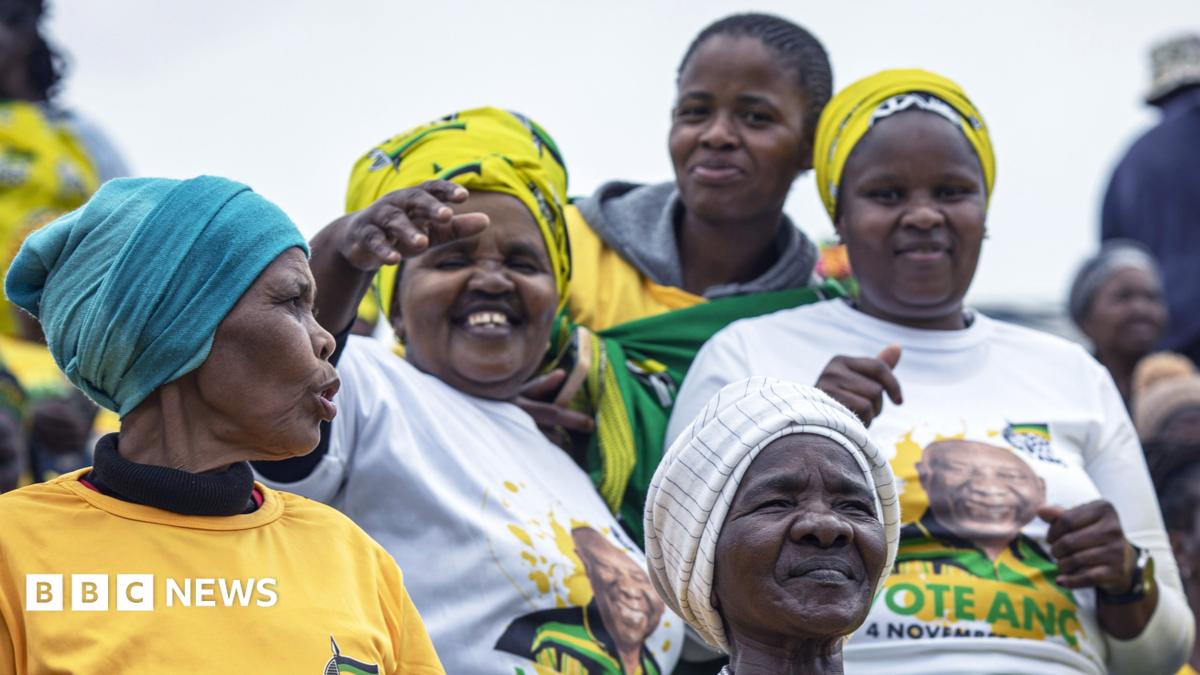
South Africans voted on Wednesday, 4 November 2026, in local elections. An Ipsos poll puts support for the African National Congress (ANC) at 30%, down from the 47% it achieved nationally in the 2021 local government elections. The contest covers nearly 300 municipalities and more than 500 parties.
Municipalities are responsible for water, electricity and refuse collection. For the ANC, the BBC reported, the vote is a chance to show it can still govern.
The campaign season was intense. Politicians spun cars, watched grannies knit and waded through giant potholes in their bids to lead local government.
Residents in Alexandra and Soweto Voice Frustration
In Alexandra, a Johannesburg township a stone’s throw from Sandton, the BBC found rubbish piled on pavements. It also found the smell of raw sewage and potholes gutting the roads. Sandton is known for skyscrapers, designer shops and well-maintained roads.
Zandile Mncube, 33, is registered but said she wouldn’t vote, citing poor service delivery. She said it makes no difference
.
On one street, heaps of rubbish lay beneath a light pole covered in posters from the different parties. Drain water trickled through the potholes on the other side of the road. A resident told the BBC the area struggles with rubbish, electricity and water.

In Soweto, 45-year-old Mduduzi Makhubo said Every Monday we know we won’t have water after 2pm
. He plans to vote against the arrogance
he says local leaders show residents.
The BBC also met Sanele Ntombela, an 18-year-old first-time voter who said he was excited to make his voice heard. It found him on a street corner with his friends.
Audits Leave Gauteng’s Metros Without a Clean Record
Auditor-general reports have for years described the dire state of most of South Africa’s 257 municipalities. A recent report recorded 39 clean audits, the highest ranking a public entity can achieve, between 2024 and 2025. None of Gauteng’s three metros, Johannesburg, Tshwane and Ekurhuleni, was among them.
Auditor-general Tsakani Maluleke told lawmakers earlier this year that Johannesburg needs ongoing attention
. Without it, she said, financial health will keep deteriorating and service delivery will keep being compromised. The city has been labelled effectively bankrupt
.
Of South Africa’s eight metros, only three are governed by a single party. In Gauteng, all three metros are run by coalitions, with the ANC the largest party, but that might change.
Zille Wades Into Potholes as the DA Eyes Gains
Ipsos predicts the Democratic Alliance (DA) will take 28%, up from 19.9% in 2021, with a slight rise especially in Johannesburg. DA leader Helen Zille, a former Cape Town mayor, is seeking the Johannesburg mayoralty. Her campaign included swimming in potholes and ziplining over sinkholes. She arrived at her final rally in a classic BMW 325i, known locally as a “Gusheshe”. She told broadcaster 702 that towns and cities that work best are under DA governance
.
Melanie Verwoerd, a former ANC MP and South Africa’s ambassador to Ireland, said the vote delivers a verdict … and judgment
on the ANC. She expects the party to perform the worst it has ever done.
The ANC lost its parliamentary majority in the last national election, for the first time since apartheid ended in 1994. Support has fallen over the years amid anger over corruption, unemployment and crime. At its peak, in 2004, the party took 70% of the vote in the general election.
Coalitions Look Likely in Gauteng, Cape Town and eThekwini
Verwoerd predicted coalitions will remain the order of the day across Gauteng. She said the most stable would copy the national arrangement, in which the ANC and DA, historic rivals, share power in the government of national unity. The ANC lost its parliamentary majority in 2024, Euronews reported, taking just over 40%.
Analyst Dr Levy Ndou said a DA-ANC coalition looks unavoidable in most metros, the country’s largest municipalities. He said he was unsure whether the national unity arrangement could influence how the metros are run.
eThekwini, which includes Durban, would be a different story
, Verwoerd said. The uMkhonto weSizwe (MK) Party, founded by former president Jacob Zuma, was the biggest party in KwaZulu-Natal in the 2024 provincial election. Polls suggest it won’t win an outright majority in the metro and will need partners.
Verwoerd said a government would be very messy
given the party’s refusal to work with the ANC or DA. Zuma told supporters on Sunday he would take control of a number of municipalities.
Fewer Young Voters Turn Out Despite 29 Million Registered
Over 29 million citizens are registered, but turnout, especially among young people, has steadily declined. Ndou attributed this to the calibre
of candidates and the low visibility of local councillors during campaigns.
South Africa’s electoral commission has seven days to announce results. Parties then have 14 days to form a governing structure.