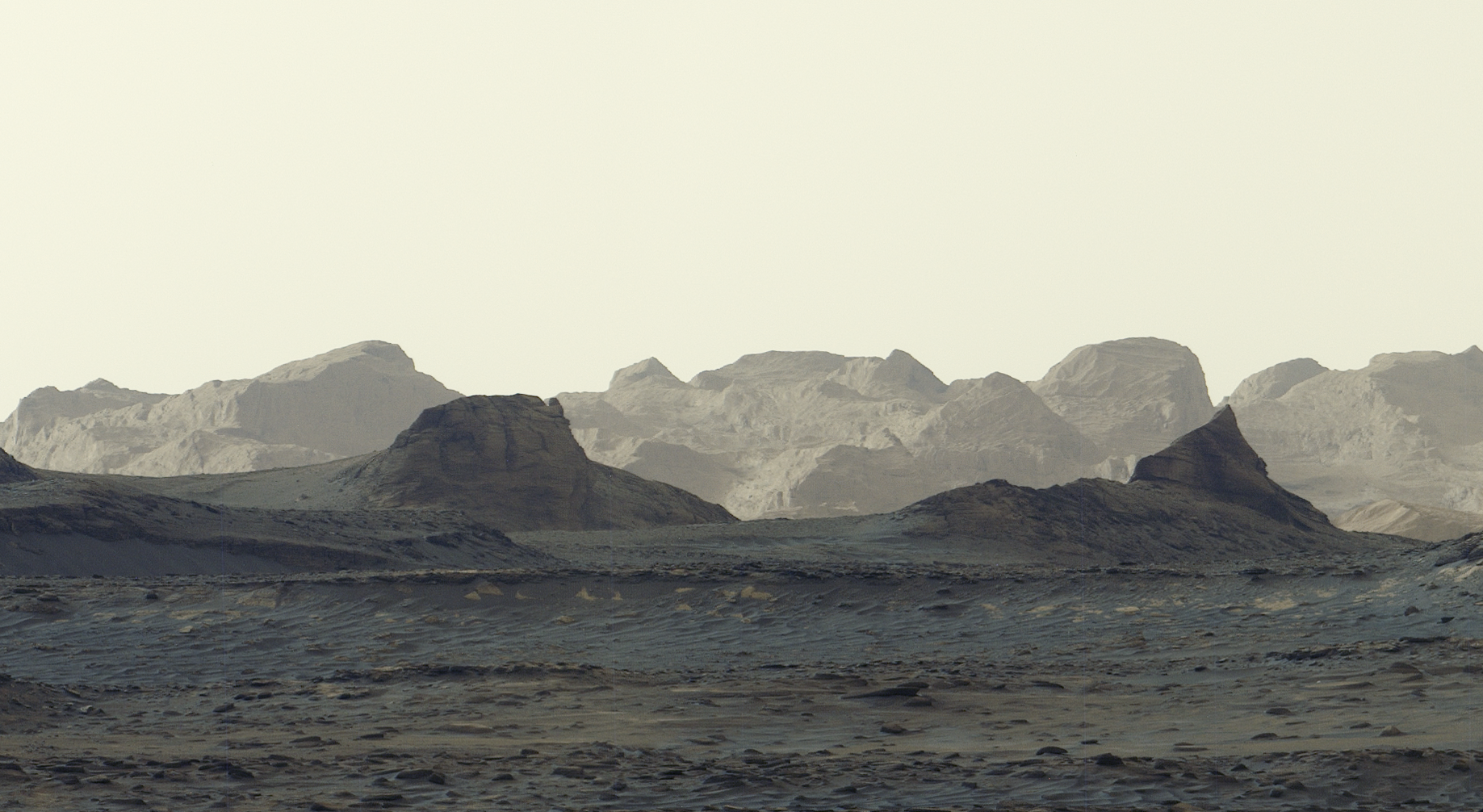
NASA’s Curiosity rover captured a detailed morning view of Martian cliffs at 8:30 a.m. local time on August 11, 2026. The panorama highlights wind-carved yardangs stretching 10 miles across Mount Sharp, marking a fresh visual milestone as the spacecraft ascends past an elevation gain of 0.6 miles.
The six-image panorama was recorded on the 4,982nd Martian day of the mission using the spacecraft’s Mastcam according to NASA. Unlike standard operational captures, the scene was processed without white balancing to preserve its true early morning appearance. Blue hues dominate the foreground while sunlight illuminates craggy formations on the horizon.
Rover Climbs Mount Sharp to Study Ancient Martian Lakes
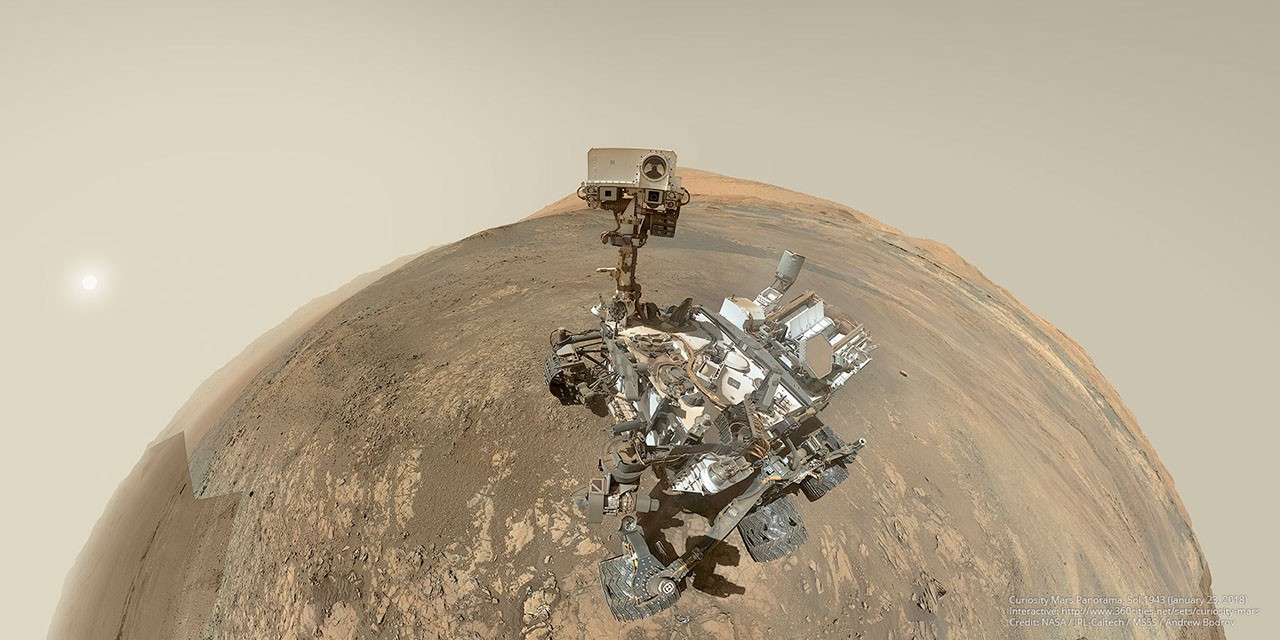
Landing in Gale Crater in 2012, the car-sized vehicle has spent more than a decade investigating the geological history of the Red Planet. Since 2014, the rover has worked its way up the slopes of Mount Sharp, a 3-mile-tall mountain rising from the crater floor. Along the way, the mission has surpassed an elevation gain of 0.6 miles, establishing a climbing record for Martian exploration.
Each layer of the mountain acts as a chronological record. Scientists have used these rock strata to study ancient lakes and streams that once covered the area before the water evaporated and left behind salty mineral deposits.
The Origin of Martian Yardangs
The distant peaks featured in the new imagery belong to a distinct geological layer stretching roughly 16 kilometers across the northwestern reaches of the mountain. Planetary researchers point out that these ridges formed through aeons of wind erosion acting on hardened sediment.
The bright craggy peaks in the distance are a rock layer that is quite different in appearance from all the layers the rover has driven through so far. We think it once was wind-blown sediment, maybe sand or maybe even ash that blew into the crater from nearby volcanic activity.
Ashwin Vasavada, Curiosity project scientist at NASA’s Jet Propulsion Laboratory
Project scientists note that the yardang layer sits above an unconformity, representing a gap in time where previous strata eroded before new material settled as reported by Reuters. Researchers plan to direct the rover toward the base of these formations in 2027, where onboard instruments and the robotic arm will examine the deposits directly.
A Landscape That Resembles Earth
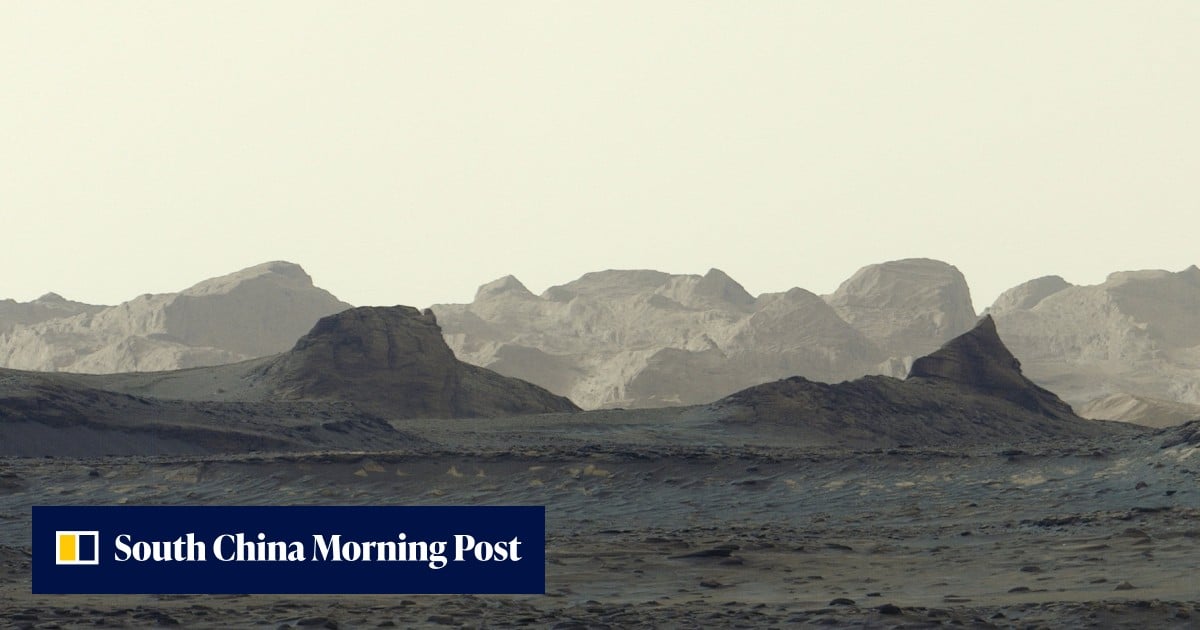
This scene has a wildness that reminds me of a road trip through Monument Valley, Arizona. You can almost feel the silence and the endless open space under the sky. But as familiar as that sounds, the sky is orange and the sunrise has shades of blue.
Ashwin Vasavada, Curiosity project scientist
While Curiosity continues its work near the sulfates and carbonates of the lower mountain slopes, NASA’s second active surface explorer, Perseverance, operates on the opposite hemisphere along the margins of Jezero Crater.