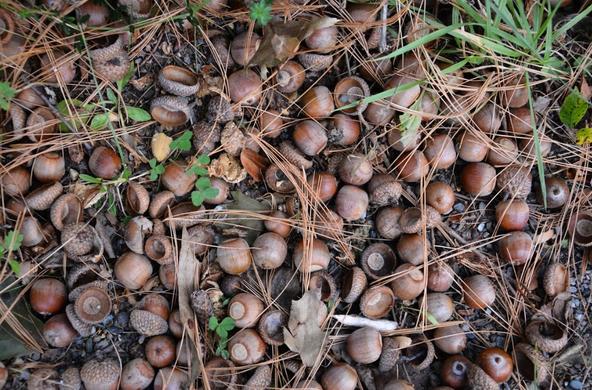
Ostfeld, lead study author and a senior scientist at the Cary Institute of Ecosystem Studies, said counting acorns in forested regions is a more reliable predictor of Lyme disease risk than tracking deer.
A 35-year study published August 17, 2026, in the Proceedings of the National Academy of Sciences links nymphal black-legged tick abundance to red oak tree cycles. The research reveals that the abundance of nymphal black-legged ticks—the stage most responsible for human infections—is driven by a chain of ecological events starting with red oak trees.
The Acorn-Mouse Connection
The study, conducted in New York State, links acorn production by red oaks directly to the population of white-footed mice. When acorns are abundant in the fall, mouse populations surge the following summer.
These mice act as the primary hosts for larval ticks. Because mice are highly efficient at transmitting the Lyme bacterium, a boom in the mouse population leads to a higher number of infected tick nymphs in subsequent years.
Rethinking the Role of Deer
Although the black-legged tick is frequently called a “deer tick” because it feeds and mates on white-tailed deer, the study suggests that deer abundance is a poor predictor of human risk. Researchers found that nymphal tick numbers did not correlate with the abundance of white-tailed deer, seasonal temperature extremes, or the prior number of larval ticks.
While she said that reducing deer populations to very low levels can limit ticks, she added that adding or removing a few animals in areas where deer are already abundant does not appear to shift tick numbers significantly.
Ecological Community Dynamics
Lyme disease risk is a product of complex community interactions rather than the dynamics of a single species. At the monitored forest sites, infection prevalence was not linked solely to the number of mice; it depended on how larval ticks were distributed across the entire community of available hosts.
The research also uncovered an unexpected dynamic: high densities of mice actually reduced the number of ticks found on individual mice and chipmunks. This suggests that hosts may experience intraguild competition for parasites, which can influence how many ticks survive to the nymphal stage.
Long-Term Monitoring Challenges
Thirty-five years of research on any ecological system is really incredible because long-term studies are very rare in any field, especially in tick-borne diseases, said Diuk-Wasser.
This work is anchored by the Cary Institute of Ecosystem Studies, an independent, nonprofit research organization headquartered on a 2,000-acre campus in Millbrook, New York. Founded to study how natural and human factors shape the world’s ecosystems, the institute is known for its leadership in long-term ecological research, including the management of the Baltimore Ecosystem Study and the Hubbard Brook Ecosystem Study.
The institute’s history is rooted in influential environmental discovery; its founder, Gene E. Likens, co-discovered acid rain in North America while conducting research in the 1960s. Today, the organization maintains the longest continuous data set on acid rain and deposition, reflecting a legacy of using decades-long observations to inform national policy and address complex ecological challenges.
Climate change adds further complexity to these predictions. While warmer weather can increase mouse numbers, it may also lead to a decrease in nymphal ticks. Researchers speculate that during warmer winters, ticks may remain active and burn through their lipid reserves, causing them to die before reaching the summer nymphal stage.
Consequently, the net effect of a warming climate on Lyme disease risk remains unclear, as ticks expand into new territories while potentially seeing population shifts in established areas. The data shows that we must look beyond single-species models to understand the true drivers of disease transmission in our changing forests, said Ostfeld.