
The Leonid meteor shower peaked overnight on Nov. 17-18, and photographers caught bright, colorful meteors despite cold, clouds and fog.
Photographers caught bright, colorful Leonid meteors as the shower peaked overnight on Nov. 17-18, despite cold, clouds and fog.
The shower is no storm. Forecasters had promised only modest counts: up to 15 meteors per hour under clear conditions, according to Bill Cooke, lead of NASA’s Meteoroid Environment Office. What the Leonids lack in numbers, they make up for in brilliance.
Leonids come from debris shed by comet 55P/Tempel-Tuttle, which orbits the sun about every 33 years. The particles hit the atmosphere at roughly 71 kilometers (44 miles) per second, among the fastest of any annual shower.
Turns out the smoke from the bright meteor early this morning was visible on camera for TWELVE (12) MINUTES just lingering there. I was able to make a rough timelapse video to show this. — November 18, 2026 York, Maine pic.twitter.com/pm9htHcMm3
The meteors appear to radiate from the constellation Leo, which rises in the east after midnight. Conditions improve toward dawn as Leo climbs higher. Mars and Jupiter also form a pair just in front of the lion’s chest, a bonus for those who stay up.
In the southern hemisphere, Leo stays relatively low in the northern sky. The hours before dawn are the best time to look there.
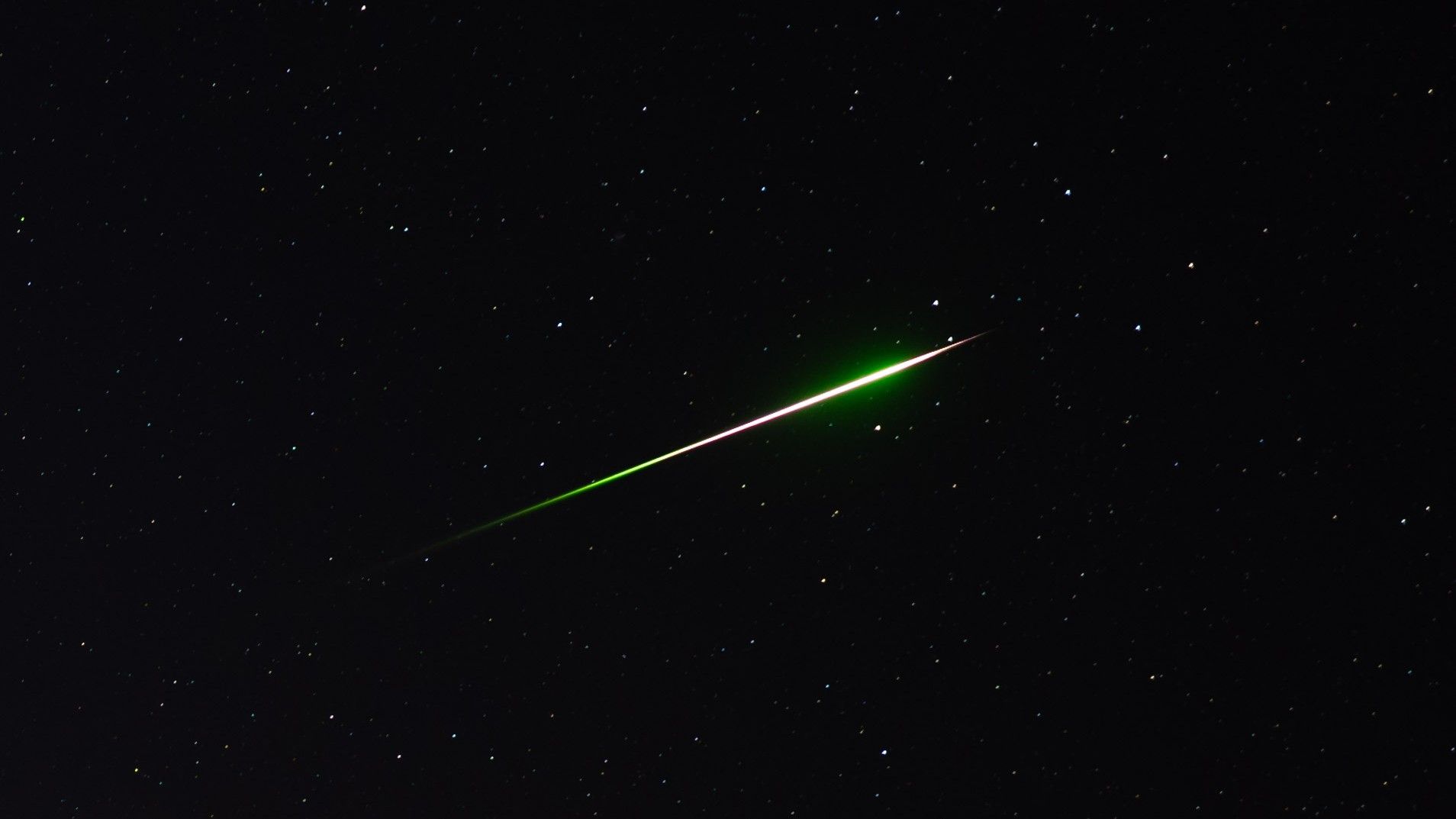
A Trail That Hung for 12 Minutes
Space.com’s photo roundup singled out astrophotographer Rob Wright. His camera followed the smoke from one bright meteor for far longer than anyone expected.
“Turns out the smoke from the bright meteor early this morning was visible on camera for TWELVE (12) MINUTES just lingering there,” Wright wrote on X.
さきほど、しし座流星群の大火球が流れました。2026年11月19日4時35分2秒に、平塚から北の低い空に向けたカメラでとらえた様子です。緑色のアフターグローからオレンジ色の永続痕まで、美しく色を変化させました。 pic.twitter.com/Q5ihqCPtX2
Photographer Austin Rebello drove several hours to the same lighthouse to meet Wright, hoping to capture a Leonid or two. “I specifically drove a few hours up there for hopes of capturing exactly this, as the radiant of the Leonids rose behind the lighthouse,” Rebello told Space.com in an email.
The effect is called a persistent meteor train: a trail of ionized gas that keeps glowing after the meteor is gone. Winds high in the atmosphere can twist it, according to the BBC’s Sky at Night Magazine, as cited by Space.com.
昨夜から今朝にかけて捉えた流星は正味92個でした。 11/18 22:17 〜 11/19 05:40 埼玉県中央から #atomcam #meteordetect #火球 #流星 pic.twitter.com/jRzsHdQ7MV
Conditions were mixed. In Deming, New Mexico, photographer Greg Gage dealt with clouds and unexpected fog at the peak. Astronomer Daichi Fujii, curator of the Hiratsuka City Museum in Japan, photographed a spectacular Leonid fireball as it streaked across the sky over Hiratsuka in the early hours of Nov.
🌠 The Leonid meteor shower peaks this week, and it’s the fastest annual meteor shower, with meteors hitting our atmosphere at about 70 km per second. They’re debris from Comet Tempel-Tuttle, which circles the Sun every 33 years.
Why a Dark Sky Mattered
Cooke’s advice before the peak was blunt.
“Leonids are faint, so you’re not going to see any Leonids from the suburb,” Cooke said.

He put the best viewing at around 2 or 3 a.m. in any time zone, when Leo stands higher and the 39%-lit waxing crescent moon has set. He also warned against checking a phone, which disrupts the eyes’ adjustment to darkness.
No gear required. “Lie on your back and take in as much sky as you can. No telescopes, no binoculars, just your eyes,” Cooke said.
昨夜の流星とスプライト、初めて同じタイミングで撮れた。 11/19 02:19:36 埼玉県中央から北西の空 #atomcam #meteordetect #火球 #流星 #スプライト pic.twitter.com/LBipTuoM0L
Astronomy Magazine offered a spotting tip: look 40° to 60° to either side of Leo, where the longest trains also appear. It expected roughly a half-dozen or more Leonid meteors per hour.
The Leonids can be seen from both hemispheres, though Leo sits lower south of the equator, which may limit the number of visible meteors in that region, according to the American Meteor Society.
A likely Leonid meteor from yesterday morning. The Leonid meteor shower peaks tonight! Good luck if you go out to watch. pic.twitter.com/xxbEV32NQl
The Storms That Built Meteor Science
The great Leonid meteor storm of 1966 reaches its 60th anniversary this year. Observers at its peak reported an astonishing 40 meteors per second.
“That really rocked people’s boat back then,” Cooke said. “They are the shower that started it all.”
The Leonids are peaking, and here's how to see them! 🌠 The peak of the #Leonids is at 0 UTC on November 18, 2026. You might have already seen some this morning. Watch late Tuesday night through dawn on Wednesday morning.https://t.co/6uCqJKsRXK 📸 https://t.co/3d6wShOgKW. pic.twitter.com/YBIfr8Qxwj
That flurry helped launch the scientific study of meteors, as astronomers began asking what caused the streaks. “It was the Leonids that gave birth to meteor science back in the early 19th century, so without the Leonids, we wouldn’t know nearly as much about meteors as we do now,” Cooke said.
Storms are not on a fixed clock. According to Meredith MacGregor, an associate professor in the department of physics and astronomy at Johns Hopkins University in Baltimore, debris accumulates as the comet approaches the sun, yet Jupiter’s gravitational pull and that of other planets can change the path the comet’s debris follows. Cooke said scientists expect the next Leonid meteor storm to occur in 2033.
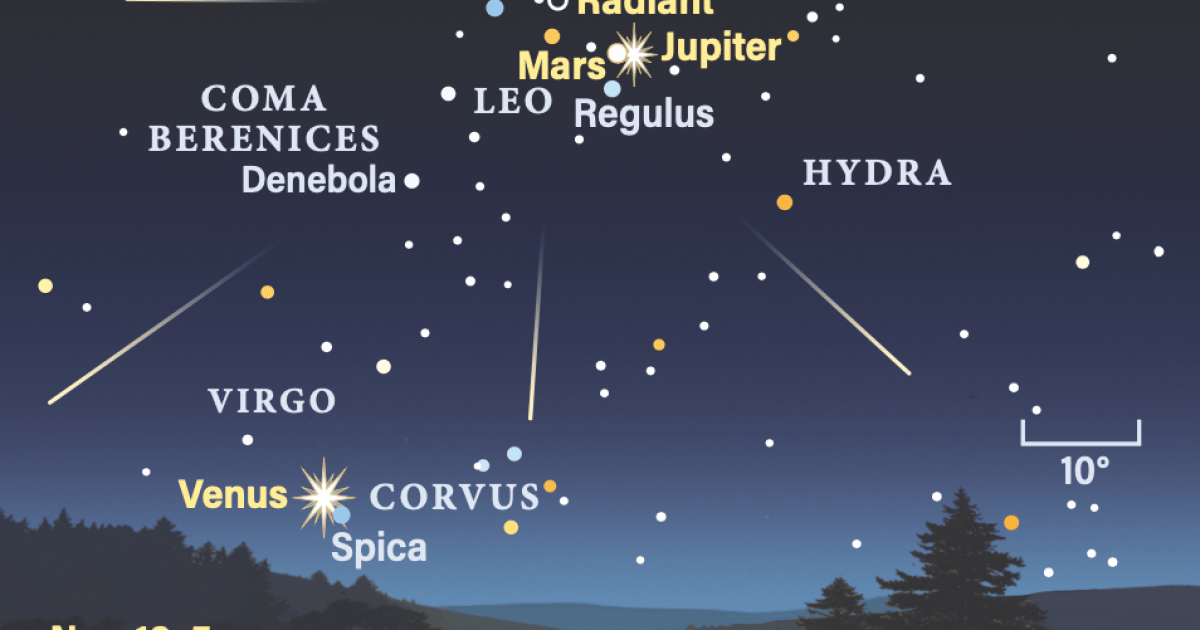
No meteor storm is expected this year, but MacGregor said that watching the annual shower Monday through Tuesday still gives a unique chance to connect with the cosmos.
According to the American Meteor Society, Leonid meteors should keep flaring in the sky until the shower ends on November 30. The Geminids come next, one of the most prolific meteor showers of the year, and they will peak overnight on Dec. 13-14.
🌠 In 1833, the sky erupted with as many as 100,000 meteors an hour. A young Abraham Lincoln witnessed the spectacle. The Leonids return this week! No historic storm is expected, but shooting stars, moon-free skies and bright planets await early Wednesday. Here's how to watch —…