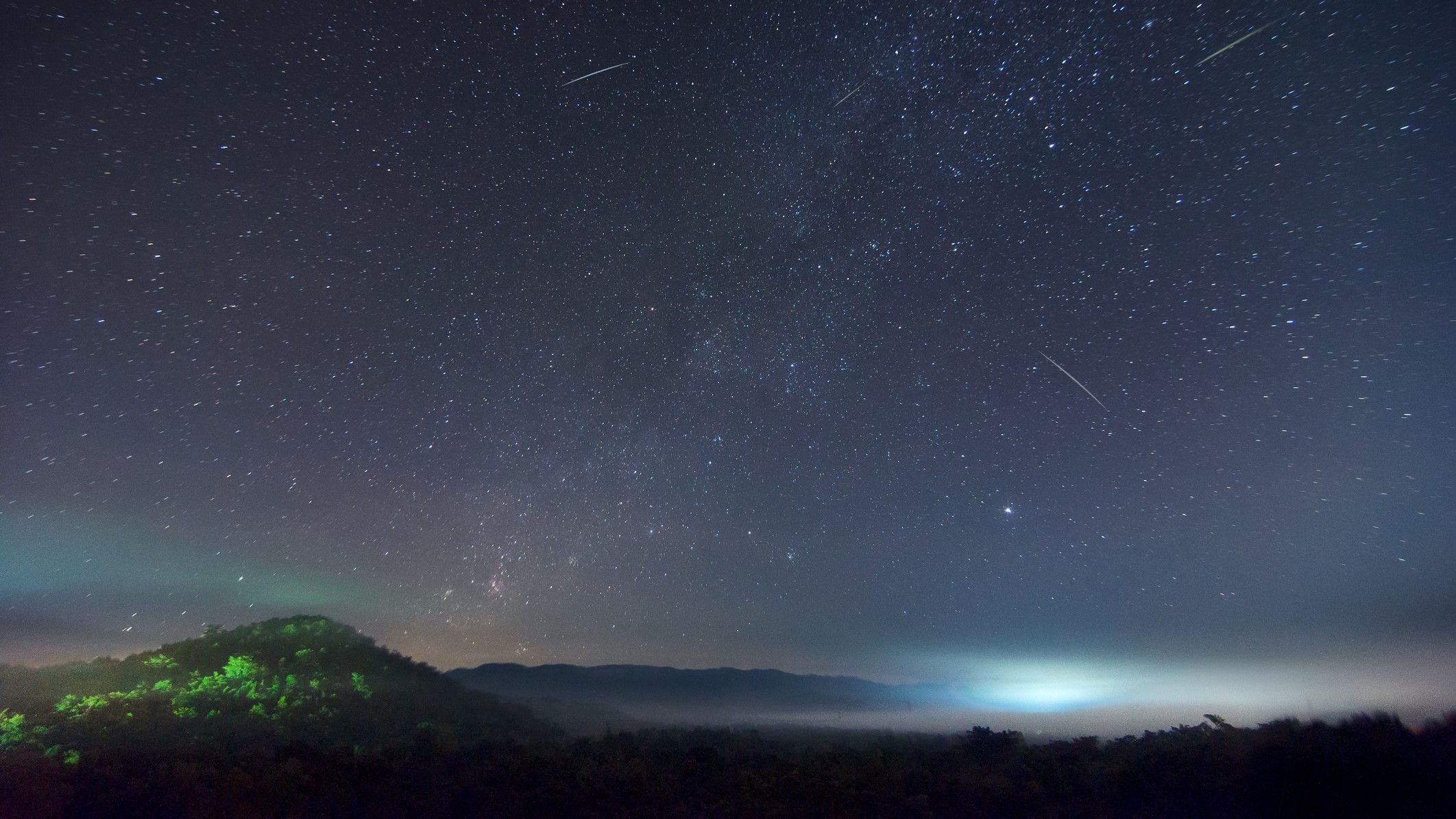
The Leonid meteor shower becomes active on Nov. 6, and runs through Nov. 30, with its peak falling on the night of Nov. 17-18, depending on which calendar and time zone a skywatcher follows. Most sources forecast about 15 meteors per hour at best, under dark skies.
Peak timing: Nov. 16-17, Nov. 17 or Nov. 18
The sources do not agree on a single peak night, though the gaps are small. Space.com, citing the International Meteor Organization’s 2026 calendar, lists a predicted maximum of Nov. 17 at 6:45 p.m. EST (2345 GMT), and says the early hours of both Nov. 17 and Nov. 18 are worth watching in North America. Skywatchers in Europe should favor the early hours of Nov. 18.
The American Meteor Society lists the peak night as Nov. 16-17, while USA Today, also citing the society, gives Nov. 16-17 for the peak. Paris Secret points to the night of Nov. 17-18. In Azerbaijan, Baku State University’s astrophysics department expects the peak on Nov. 18 at 03:45 Baku time. The department says the best observing window there is the night of Nov. 17 to 18, between 02:00 and dawn, when the Moon’s setting may help faint meteors show up.
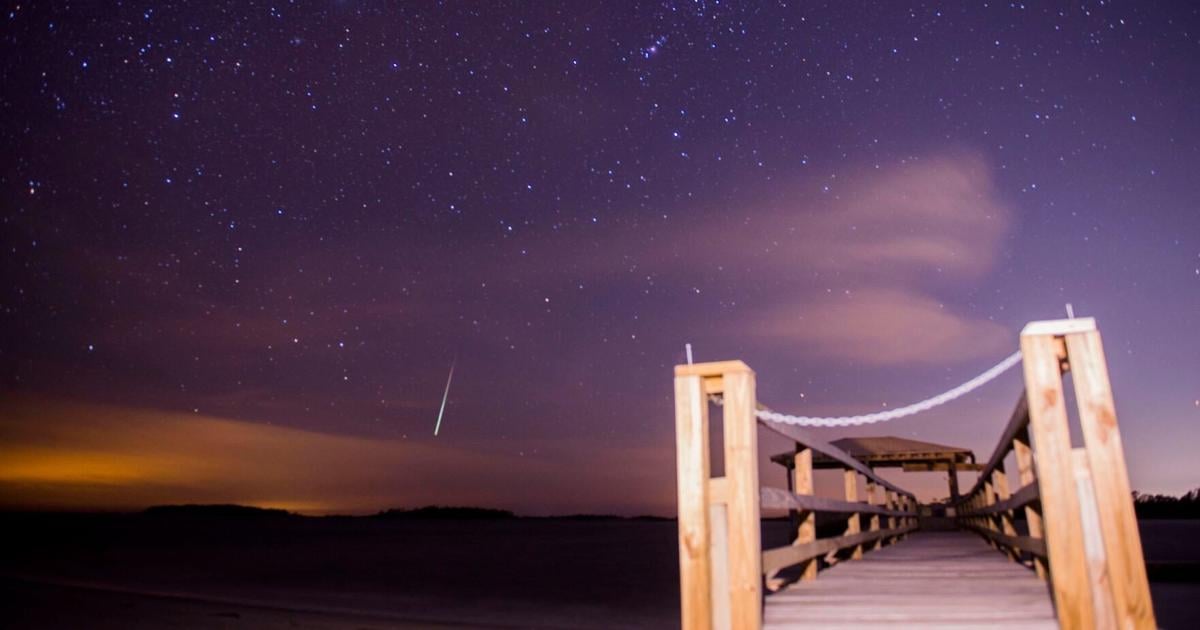
The American Meteor Society notes that meteor showers do not switch off after the peak, so the nights of Nov. 15-16 and Nov. 17-18 are worth a try. One outlier on the start date: Technology Org lists activity from Nov. 3 to Dec. 2, while the rest give Nov. 6 to 30.
How many meteors to expect from the Leonids
Expect a modest show. The standard figure is a Zenithal Hourly Rate of 15, meaning what one observer would see in an hour with a clear, dark sky and the radiant directly overhead. Space.com stresses that this doesn’t mean 15 shooting stars,
hour after hour in real conditions. Starlust adds that local weather, light pollution and sky darkness will set the actual count.
Estimates run lower and higher. Russia’s Ural Federal University educational observatory has forecast up to 20 meteors per hour at the peak, and says that figure is only an estimate. Mid-Day puts the range at 10 to 15 an hour.
No storm is coming. Baku State University’s department says no powerful storm is expected in 2026. Technology Org says the next outburst is predicted for 2033-2034, and the American Meteor Society says Earth is not expected to hit another dense debris cloud until 2099. The shower comes from debris left by comet 55P/Tempel-Tuttle, which orbits the sun about every 33 years. This year marks 60 years since the 1966 storm, when some reports described 40 meteors per second.
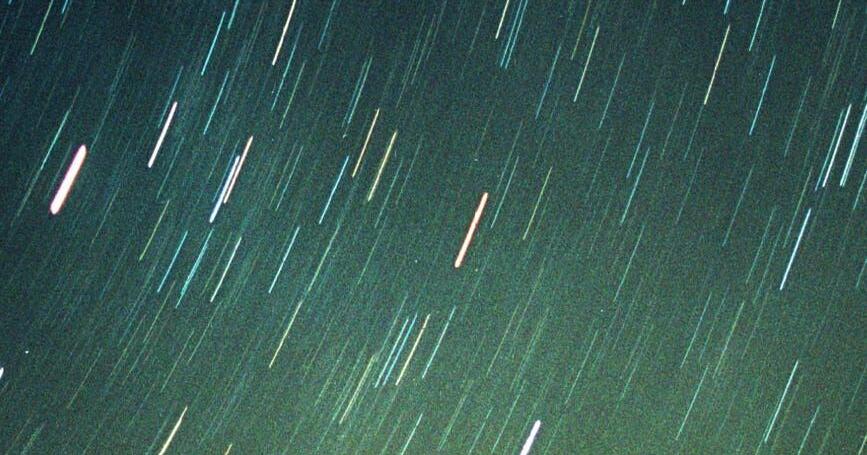
The comet behind the shower
Space.com describes 55P/Tempel-Tuttle as a small comet, with a nucleus about 2.24 miles (3.6 km) across. It was found independently by Ernst Tempel in 1865 and Horace Tuttle in 1866, and the comet carries both names. The “P” in its designation marks it as periodic, with an orbit shorter than 200 years. It is due back in 2031.
When Earth crosses a dense, older trail of the comet’s dust, rates can climb to thousands per hour, as in 1833, 1866 and 1966. NASA defines a meteor storm as at least 1,000 meteors per hour, and the last Leonid storm came in 2002. Baku State University also points to intense events in 1999-2002. When the comet returns in 2031 and 2064, displays may top 100 meteors per hour, though probably without a storm.
Moonset near midnight clears the best hours
Lunar conditions favor observers. The moon is 39% illuminated on peak night and sets before the meteors’ radiant climbs high, leaving darkness before dawn. Space.com and BBC Sky at Night Magazine both point to the hours between midnight and dawn as best.
Starlust lists when the radiant in Leo rises on Nov. 17, among them 22:54 EST in New York, 23:09 PST in Los Angeles and 22:45 CST in Chicago. Meteors can appear anywhere overhead, so there’s no need to stare at Leo. Space.com suggests finding the bright star Regulus and the backward question mark known as the sickle. Technology Org adds that meteors farther from the radiant have longer streaks that are easier to spot.
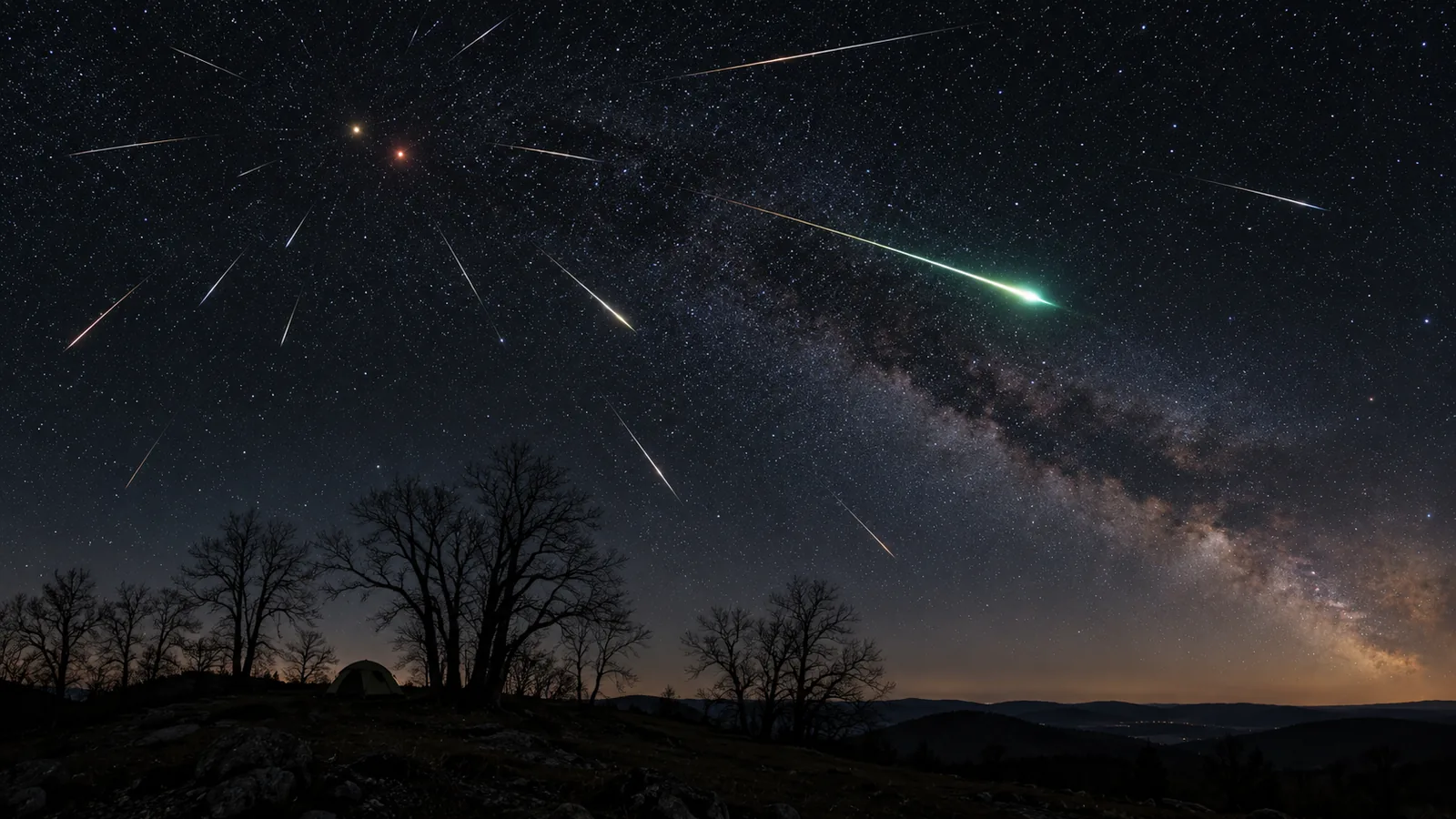
Watching tips: 30 minutes of dark adaptation
The advice converges. Skip binoculars and telescopes. Get away from artificial light and give your eyes about 30 minutes to adapt; Starlust says 15 to 20 minutes. If you need your phone, turn its screen red first. Bring warm clothing and a reclining chair, and watch with others, since a group improves the odds of catching a streak.
Leonids hit the atmosphere at about 71 km/s (44 miles per second), among the fastest of any annual shower, and NASA says some are long “Earth-grazers” skimming the horizon.
Taurids overlap with the Leonids
Technology Org notes that the Taurids also run in autumn and are known for bright, slow meteors. The Southern Taurids come from comet 2P/Encke, while the Northern Taurids likely come from asteroid 2004 TG10, a leftover of a large parent comet that also produced 2P/Encke. The Southern branch peaks Nov. 4-5 at 5-10 meteors per hour. The Northern branch is active Oct. 20 to Dec. 10 and peaks Nov. 11-12.