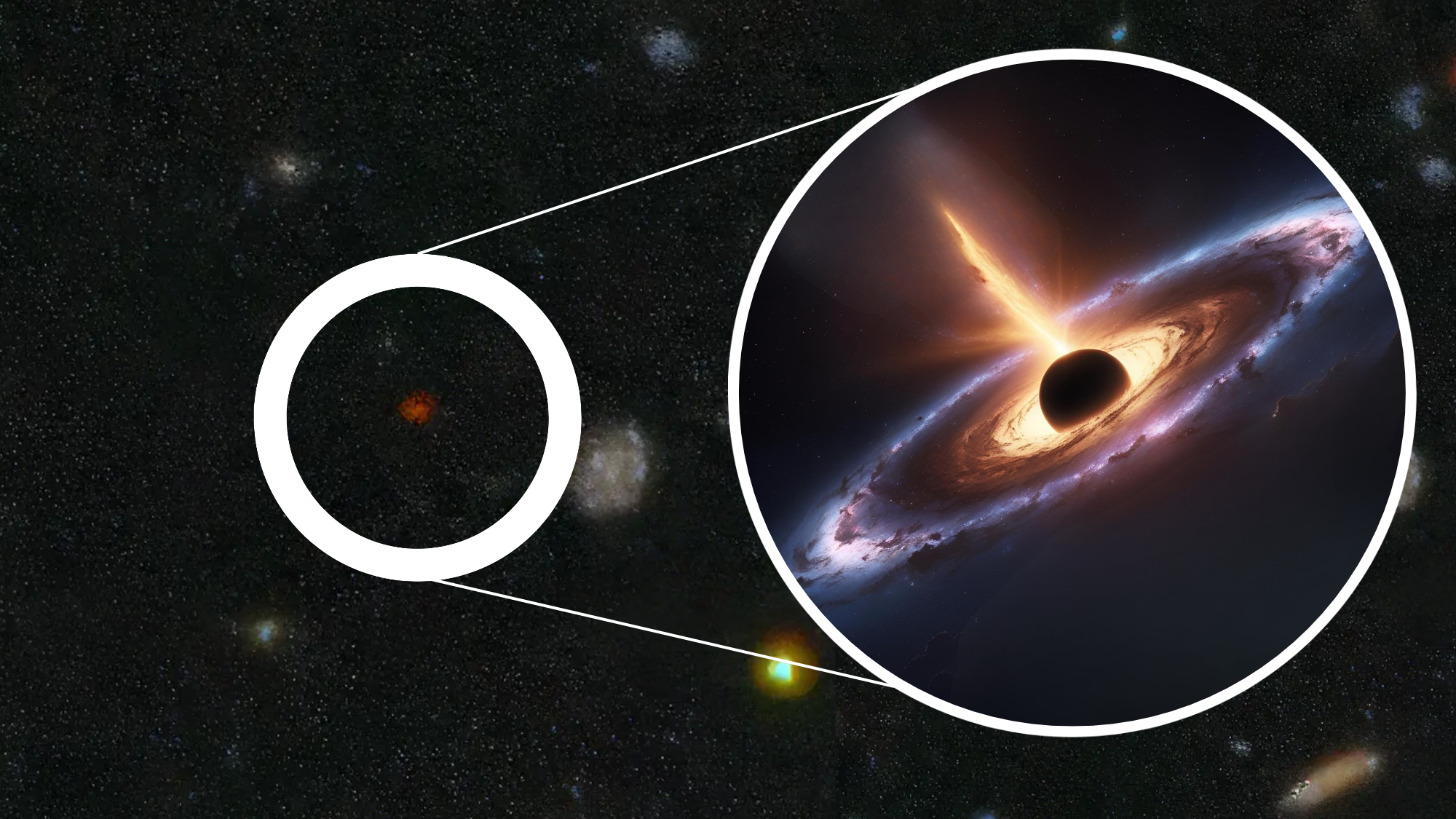
Astronomers using the European Space Agency’s Euclid space telescope have discovered the earliest-known quasar, an ancient galactic core observed as it existed 630 million years after the Big Bang.
Euclid Finds Oldest Known Quasar
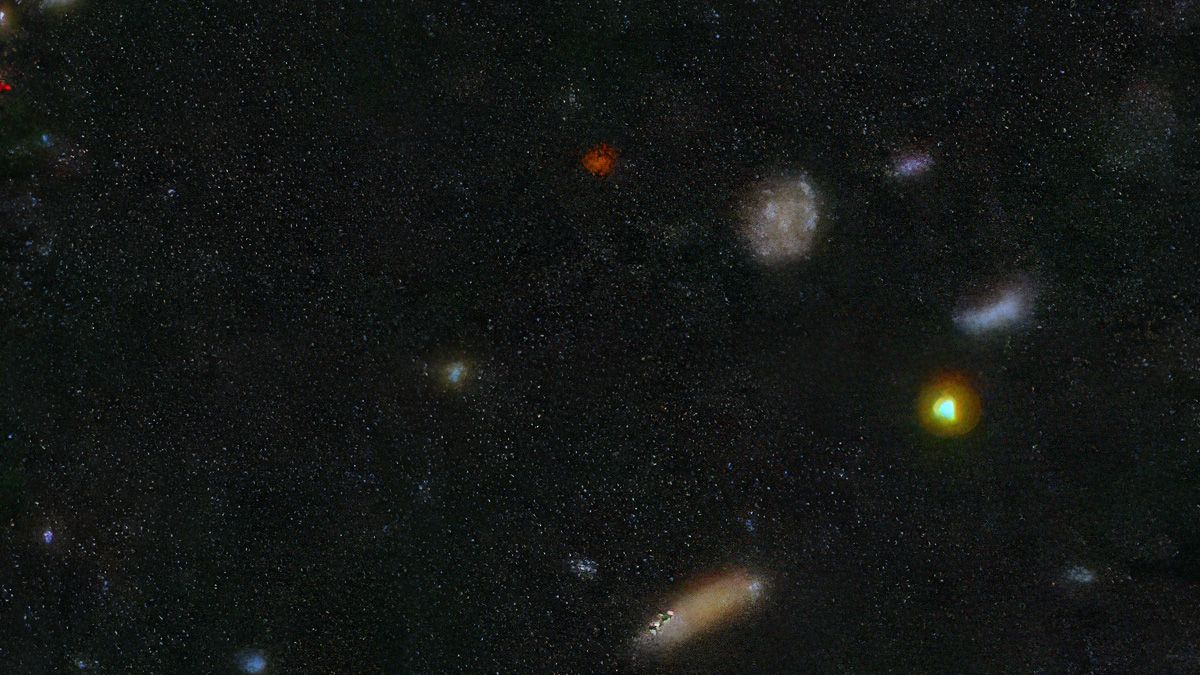
Designated J1504+6252 and nicknamed Dún Aonghasa after a prehistoric stone fort on Inis Mór in Ireland, the object boasts a redshift of 8.13. That measurement makes it approximately 13.1 billion years old and pushes the cosmic record back by about 40 million years compared to previous findings.
Quasars represent the extremely bright central regions of active galaxies powered by supermassive black holes.
“As enormous amounts of gas, dust and matter fall toward the black hole, they form a swirling accretion disk that heats up to extreme temperatures and radiates tremendous amounts of energy, outshining the entire rest of the galaxy by factors of hundreds or even thousands,” explained Dr Silvia Belladitta of the Max Planck Institute for Astronomy and the INAF Bologna Observatory, as reported by DW.
The discovery emerged from 18 months of data collected by Euclid, a mission launched in 2023 primarily to investigate dark matter and dark energy, as detailed by Space. Initial observations by Euclid were subsequently confirmed and characterized using ground- and space-based facilities, including the W.M. Keck Observatory, the Large Binocular Telescope Observatory, the Hubble Space Telescope, and the James Webb Space Telescope (JWST).
Black Hole Defies Growth Models
Using medium-resolution JWST spectroscopy, researchers determined that the supermassive black hole powering Dún Aonghasa weighs about 360 million times the mass of the Sun. That massive scale so early in cosmic history challenges current theories of how black holes accumulate mass.
“I think it adds to the evidence that some objects in the early universe developed remarkably quickly. Just 630 million years after the Big Bang, this black hole had already grown to about 360 million times the mass of the sun and was shining as a quasar,” said Dr Julien Wolf, lead author of the research from the European Southern Observatory, as noted by HuffPost.
“Finding quasars at ever-increasing distances, at the edge of the observable universe, teaches us something about how the black holes in their centres grew,” study co-author Julien Wolf, a researcher at the Max Planck Institute for Astronomy, said in a statement.
Follow-up data shows the black hole is currently feeding at a relatively slow pace. That leisurely consumption rate complicates standard models, which typically require extensive periods of rapid feeding to reach supermassive dimensions.
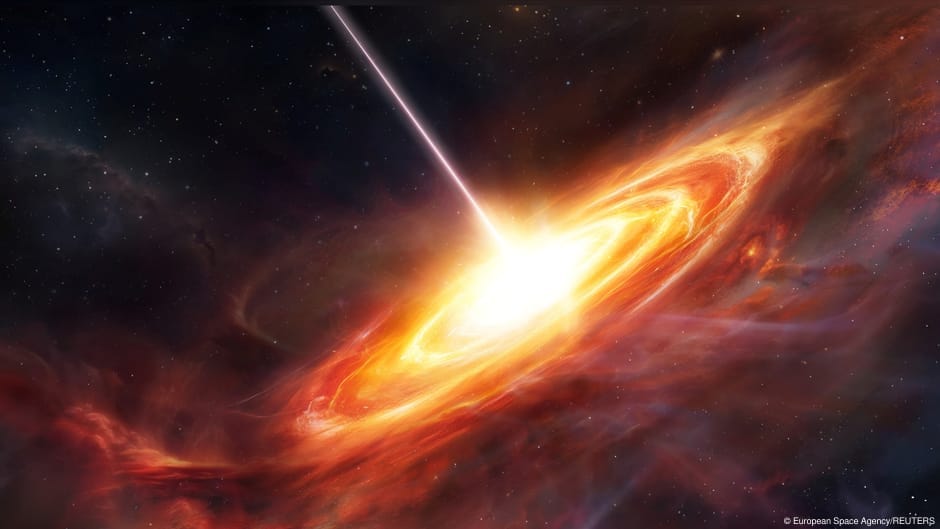
“The closer to the Big Bang we find them, the faster their black holes must have grown or the more massive they must have been at birth — or both,” Dr Wolf said in findings published in the journal Astronomy & Astrophysics.
Scientists Test Formation Scenarios
To account for how such an immense object formed so quickly, scientists evaluate several scenarios. The observations appear consistent with a direct collapse model, wherein a massive gas cloud condenses under its own gravity to form an initial black hole seed that subsequently accumulates more matter, according to analysis from the Max Planck Institute for Astronomy.
If standard growth limits or direct collapse mechanisms fall short of explaining these early heavyweights, researchers may need to consider more exotic alternatives, such as primordial black holes generated immediately after the Big Bang.
Euclid has flagged 31 quasars in total, including 12 situated beyond a redshift of 7, according to Nature World News. Researchers expect upcoming instruments, including the Extremely Large Telescope, to provide deeper insights into these extreme cosmic beacons.
German-Led Team Announces Discovery
A German-led team reported the discovery on Tuesday after sifting through millions of observations collected during the Euclid Wide Survey, the telescope’s large map of the sky, according to the Max Planck Institute for Astronomy.
Follow-up observations using the James Webb Space Telescope confirmed the finding and provided the spectrum used to measure the black hole’s mass at about 360 million solar masses, with a plausible range of roughly 210 million to 780 million.
Nickname Honors Irish Heritage
Lead author Julien Wolf nicknamed the quasar Dún Aonghasa after the prehistoric stone fort on Inis Mór in Ireland’s Aran Islands. His wife and daughter are Irish, and he was awestruck when they visited the cliffside fort — a frontier holding “the promise of a vast horizon still to explore,” just like this quasar.
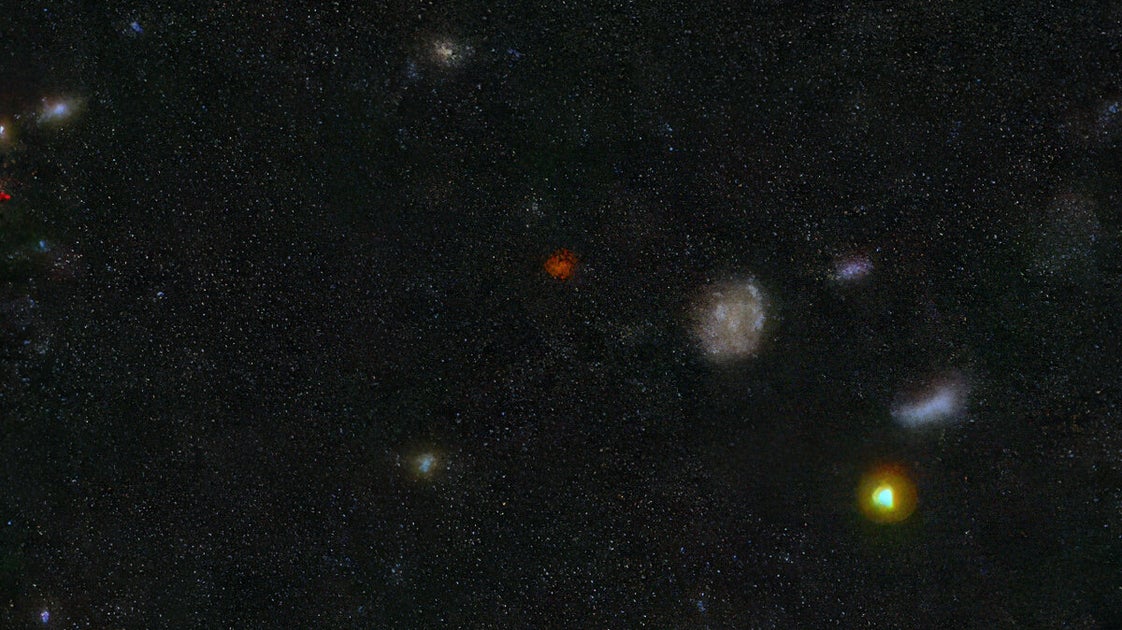
Wolf added that the record could fall again in a few months or stand for years, and that Euclid may yet spot quasars at even greater distances. Theoretical models suggest the first quasars could potentially date to 270 million to 470 million years after the Big Bang. The study was published on November 24 in the journal Astronomy & Astrophysics.
Slow Feeding Rate Complicates Models
Follow-up data show the black hole is consuming material at a rate too slow to have reached its great mass so quickly under standard accretion scenarios, according to Reuters.
Even at the theoretical Eddington limit, a black hole only doubles its mass every few tens of millions of years, making the timeline difficult to reconcile. One possibility is that the black hole started small after the demise of a first-generation star, but the observed feeding rate cannot account for its size.
Another possibility is direct collapse, in which a massive gas cloud collapses straight into a large black hole seed, giving it a head start. The observations appear consistent with that scenario, researchers said.
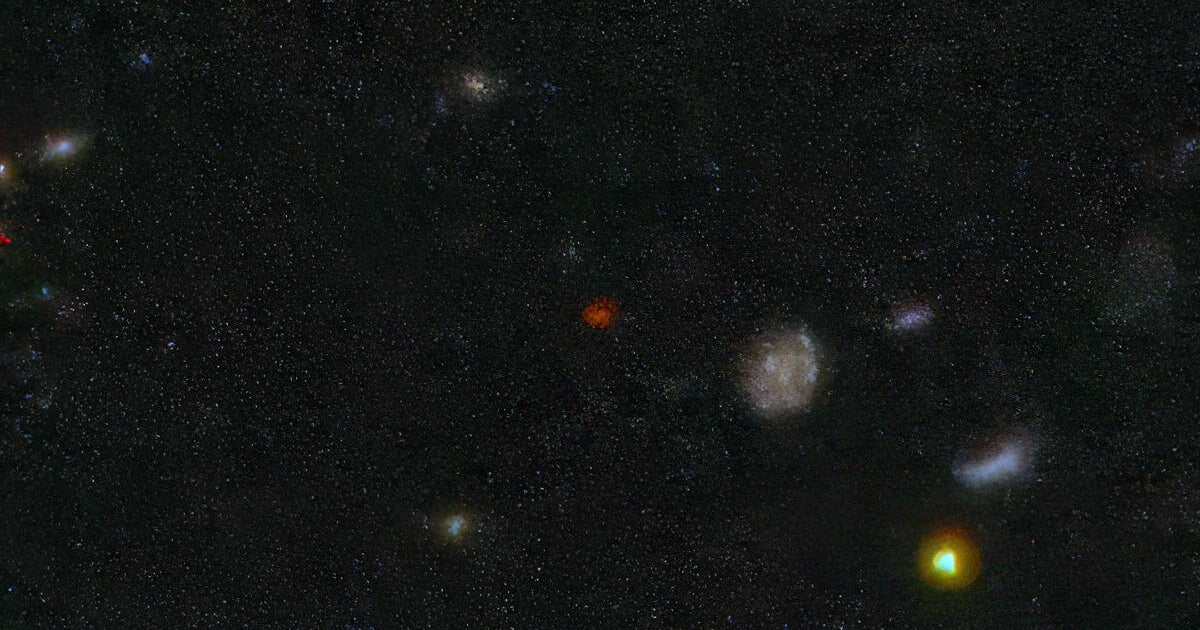
Euclid Survey Reveals Population of Early Quasars
In barely 1.5 years, Euclid has flagged 31 quasars, including 12 beyond a redshift of 7, demonstrating the telescope’s power to probe the cosmic dawn. “They are really the only tools that we have to study the universe from now to the past,” co-lead author Silvia Belladitta told IFLScience. She added that searching for these objects closer to the Big Bang imposes very stringent constraints on the timescales available for black hole formation.
Dr Wolf explained that the pursuit is not simply a chase for records but a way to tighten those constraints. The authors stressed that upcoming observatories such as the Extremely Large Telescope will help gain further insights into these extreme objects at the edge of the known universe.
Euclid Wide Survey Identifies Massive Black Hole at Record Redshift
The identification was achieved through the Euclid Wide Survey, which maps large areas of the sky to detect faint targets. Because visible and near-infrared instruments can differentiate light signatures, candidates are flagged when they appear prominently in infrared filters. The newly found black hole possesses a mass roughly 90 times greater than the supermassive black hole located at the center of our own Milky Way galaxy.
The systemic redshift was precisely determined at 8.129 with a margin of plus or minus 0.005, which shifts the known quasar redshift frontier by approximately 39 million years, accounting for about six percent of the total age of the universe at that epoch.
Previous record holders included an object announced earlier in the year at a redshift of 7.77, and another discovered prior to Euclid at a redshift of 7.64 that dated back 670 million years after the Big Bang.