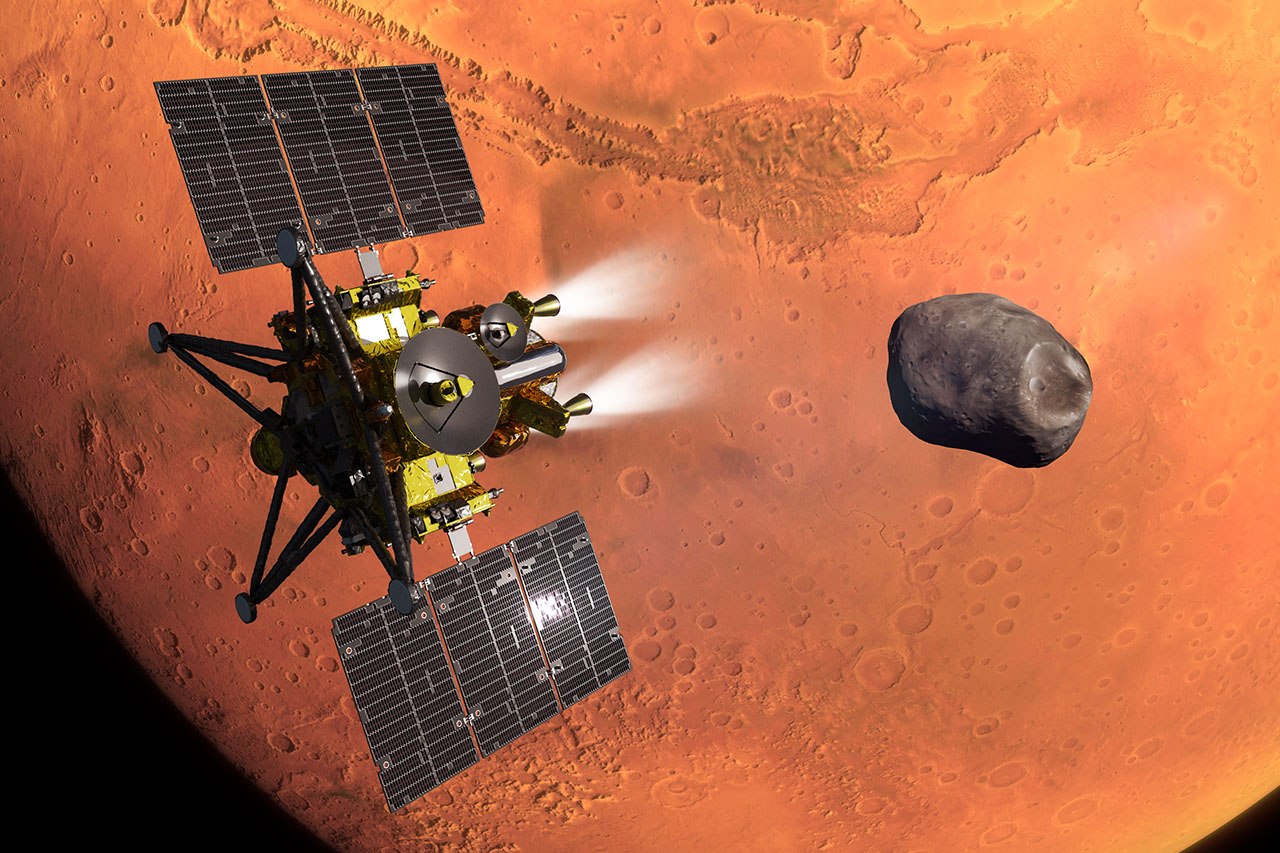
Japan’s space agency JAXA is set to launch its Martian Moons eXploration (MMX) spacecraft on an H3 rocket from Tanegashima Space Center at about 4:41 a.m. Tuesday, Oct. 20, Japan time (7:41 p.m. Monday UTC, per NHK). The mission aims to return the first samples from Phobos.
NASA lists the same moment as 3:41 p.m. EDT on Monday, Oct. 19, while The Conversation gives 20:41 BST. The date differs only by time zone. NHK puts the three-module mission’s development cost at 55.3 billion yen, or roughly 350 million dollars. The outcome of the launch is not yet known.
Spacecraft Lands Where Gravity Is Weak
Phobos has just one two-thousandth of Earth’s gravity, according to the AP account. That makes touchdown a bounce risk. The exploration module has four-legged landing gear with shock absorption, and the AP says the rover’s wheels can grip in low gravity, right themselves if tipped and move at a snail's pace,
as JAXA put it.
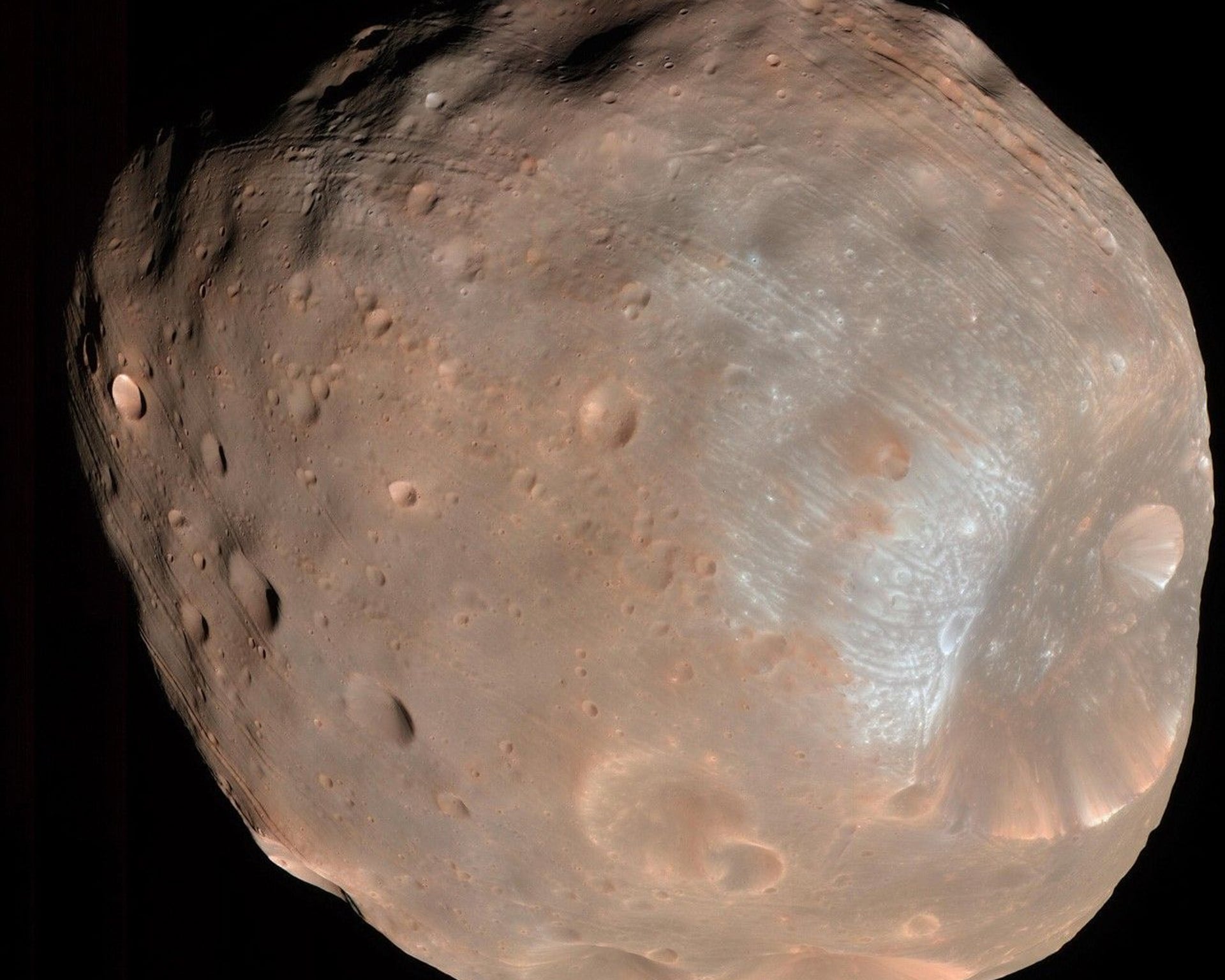
The French-German rover Idefix goes first. The sources describe a rover jointly developed by France’s CNES and Germany’s DLR, named Idefix, that will land on Phobos first, has wheels that get traction in low gravity, can right itself if it tips over, and will explore the moon’s surface during a 100-day mission. Space & Defense reports a top speed near one millimetre per second. The AP says the spacecraft will pick a relatively smooth, level site using the rover’s topographical data.
JAXA and NASA Deploy Two Sampling Systems
Scientists aim to collect at least 10 grams from two sampling attempts, the Guardian reports. NASA’s device, mounted on a landing leg, uses bursts of high-pressure nitrogen gas to lift surface material into a container, NASA says. In plain terms, it blows grains loose rather than pushing a tool into ground that offers little weight to push against. JAXA’s corer takes material from deeper down.
Spacecraft Climbs Out of Mars’s Gravity
JAXA’s Hayabusa2 returned 5.4 grams from an asteroid in 2020, Japan Today notes. Project manager Yasuhiro Kawakatsu said this time we have to travel very close to Mars and return
. He added: Going deep into what we call the ‘gravity well’ is difficult,
meaning the spacecraft must climb back out of the planet’s pull, not just reach it.
Mars is 55 million km from Earth at closest, but Kawakatsu said the actual flight is far longer, per the Guardian. Nature World News says the launch window runs to Nov. 7 and reflects the roughly 26-month Earth-Mars alignment. It also reports the launch was first planned for 2024 and slipped because of H3 problems, citing Space.com.

Mission Timeline Tracks Disputed Dates
- August 2027: arrival at Mars (NASA, Guardian).
- September 2027: Phobos quasi-satellite orbit begins, a path that circles Mars but loops around the moon (Martin Cid Magazine).
- Early 2029: Idefix release (Martin Cid Magazine).
- Sampling: no earlier than December 2028 per NASA; 2030 per The Conversation.
- 2031: return to Earth per NASA and AP; NHK says likely in the fiscal year ending March 2032.
The capsule is expected to land in Australia before going to Japan, per the AP. NASA will curate about 15% of the sample at Johnson Space Center; Space & Defense quotes program scientist Tom Statler as saying at least 15%.
Samples Will Test Moon Origin Theories
Statler said Phobos and Deimos may be the remains of a massive impact on Mars that sent material into orbit around the planet, or they could be ancient asteroids that were captured by Mars’ gravity billions of years ago,
according to NASA material. Principal investigator Kiyoshi Kuramoto told the Guardian: We can almost certainly come to a conclusion by analysing soil samples
. NASA’s Nicky Fox tied the work to human exploration, saying the samples will bring paradigm-shifting science on the Mars system for generations to come, especially as NASA prepares to send the first humans to Mars
.

Japan Today reports JAXA will also study Phobos as a possible natural space station
. It adds that the NASA-led Mars sample return was effectively cancelled after a U.S. Congress vote in January, while China says Tianwen-3 launches around 2028 and could return Mars samples as early as 2031, potentially before MMX.
Phobos has defeated earlier tries: Russia’s 2011 Phobos-Grunt failed in Earth orbit, and Martin Cid Magazine adds two Soviet probes lost in 1988 and 1989. Whether the 2031 sample points to impact debris or a captured asteroid remains unanswered.