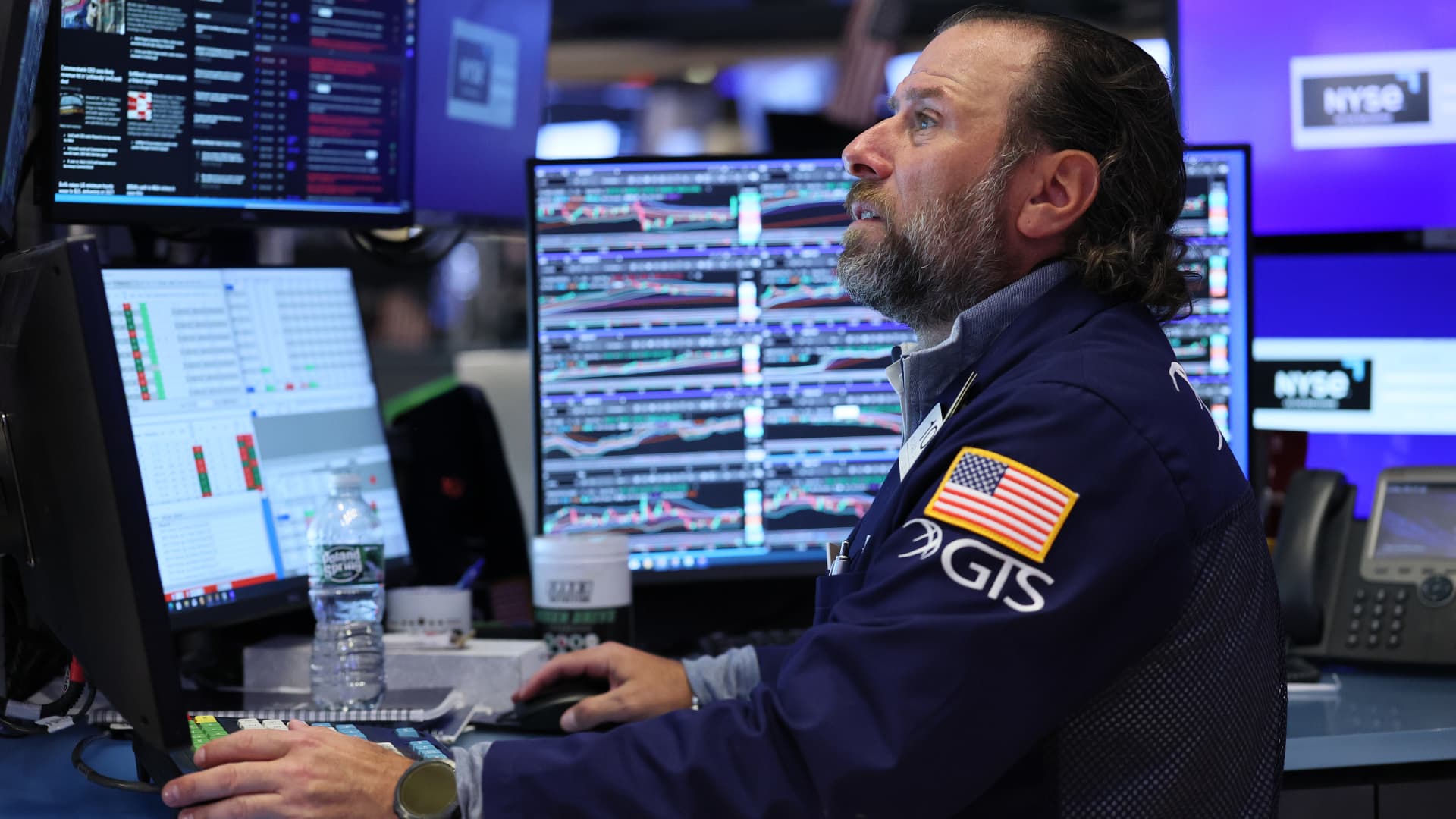
U.S. stock futures were little changed in Asian trading on Friday, October 16, 2026, as a rally in government bonds eased pressure on equities. Investors stayed cautious about technology valuations and the debt financing behind the AI buildout after a Thursday sell-off in tech hardware shares, Investing.com reported.
S&P 500 futures slipped 0.1% to 7,802.00 points, while Nasdaq 100 futures gained 0.1% to 30,173.25 and Dow Jones futures rose 0.1% to 52,496.0, according to Investing.com’s Friday report, as of 01:55 ET. An earlier version of the report, filed Thursday evening, had Nasdaq 100 futures down 0.4% at 30,019.75. The newer figures are used here.
A split Thursday session and a sharp drop in yields
In Thursday’s regular session, the Dow Jones Industrial Average climbed 1.1% as investors rotated into healthcare and consumer goods, Investing.com reported. The S&P 500 rose 0.3% and the Nasdaq Composite gained 0.1%.
Beneath those gains, tech hardware weakened. Nvidia fell 1.8%, while server makers Dell Technologies and Hewlett Packard Enterprise dropped 6.9% and 7.1%. The Philadelphia Semiconductor Index fell 0.9%, extending its losing streak to seven sessions.
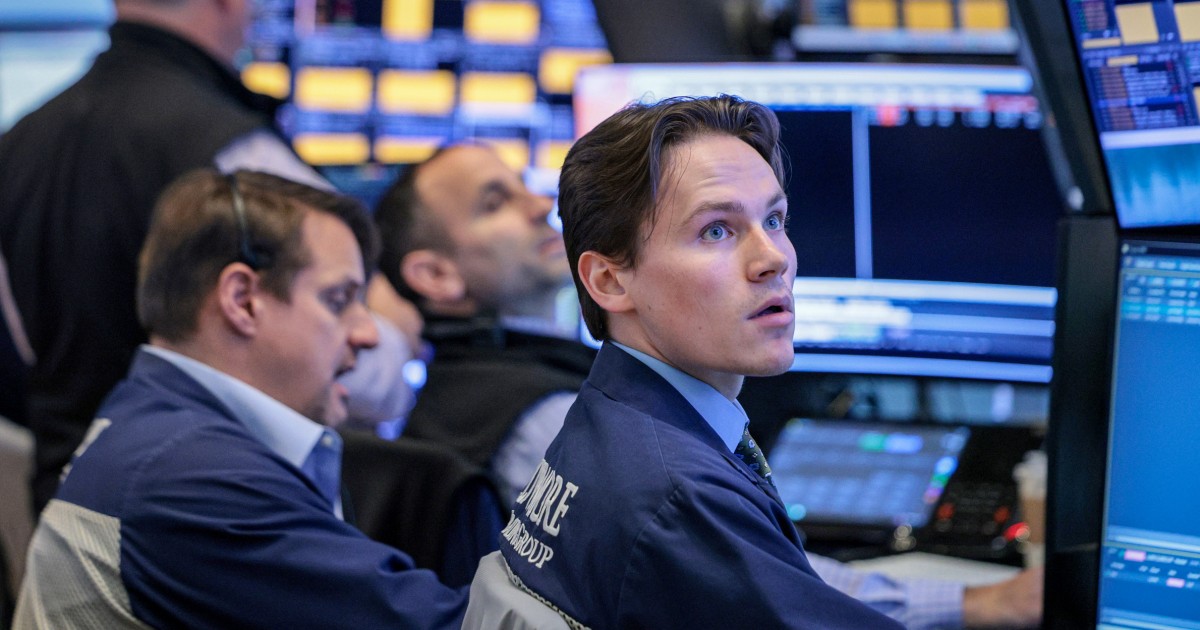
Treasury yields eased the pressure. The benchmark 10-year yield fell sharply Thursday to around 5.09%, Investing.com said. Wednesday had been worse: CNBC reported the Nasdaq Composite fell 1.88% to 26,692.87 and the S&P 500 lost 1.11% to 7,718.94 after hotter-than-expected inflation data.
Producer prices and a 67% pricing for a December Fed hike
Thursday’s data showed U.S. producer prices rose more than expected in September, the largest increase in four and a half years, Investing.com reported. NBC News said the Bureau of Labor Statistics put business inflation at its highest rate since December 2022, price growth that could eventually reach consumers.
Markets priced a 67% probability of a Fed rate increase by December, according to CME Group’s FedWatch tool, as Reuters reported. Fed Chair Kevin Warsh said Friday that persistent inflation is a shared challenge for policymakers worldwide and that the global economy was more resilient than he expected. Investing.com said he did not signal the Fed’s next move.
Over $1 trillion lost across AI stocks, with Asia hit hardest
CNBC reported that 20 of the most valuable global AI and semiconductor stocks have shed more than $1 trillion in value this week, as rate hikes, AI financing and competition weighed on sentiment. Thursday’s moves in Asia:.
| Company | Thursday move |
|---|---|
| SK Hynix | Down more than 10% |
| Samsung Electronics | Down 8.73% |
| SoftBank Group | Down 7.9% |
| Advantest | Down almost 14% |
| Tokyo Electron | Down 6.45% |
On funding, Nvidia CEO Jensen Huang told Bloomberg he saw no need for Nvidia to backstop CoreWeave: Their cost of capital is actually decreasing.
Dan Ives, tech analyst at Yorkville Ives, said the latest pullback presents a buying opportunity. He said rates are a financing question, not a demand question.
What the U.S. economy is riding on
NBC News reported that nearly half of U.S. economic growth this year is attributable to tech-related spending. It said the S&P 500 sat about 1% below its record from a week earlier and the Nasdaq more than 3% below its peak. Economist Ed Yardeni cut his year-end S&P 500 target to 7,900 from 8,400.
Wells Fargo CEO Charlie Scharf said this week that strong positive forces such as the investment in AI infrastructure, high employment levels and consistent wage growth continue to outweigh the risks
. Citi analysts wrote Thursday that higher rates, elevated energy prices, slow job growth and the equity sell-off, if it continues, are downside risks to consumer spending.
Ives named his own test: What would change our view is a demand signal, not a rate signal,
pointing to cuts in hyperscaler capital spending, canceled contracts or falling GPU rental prices.