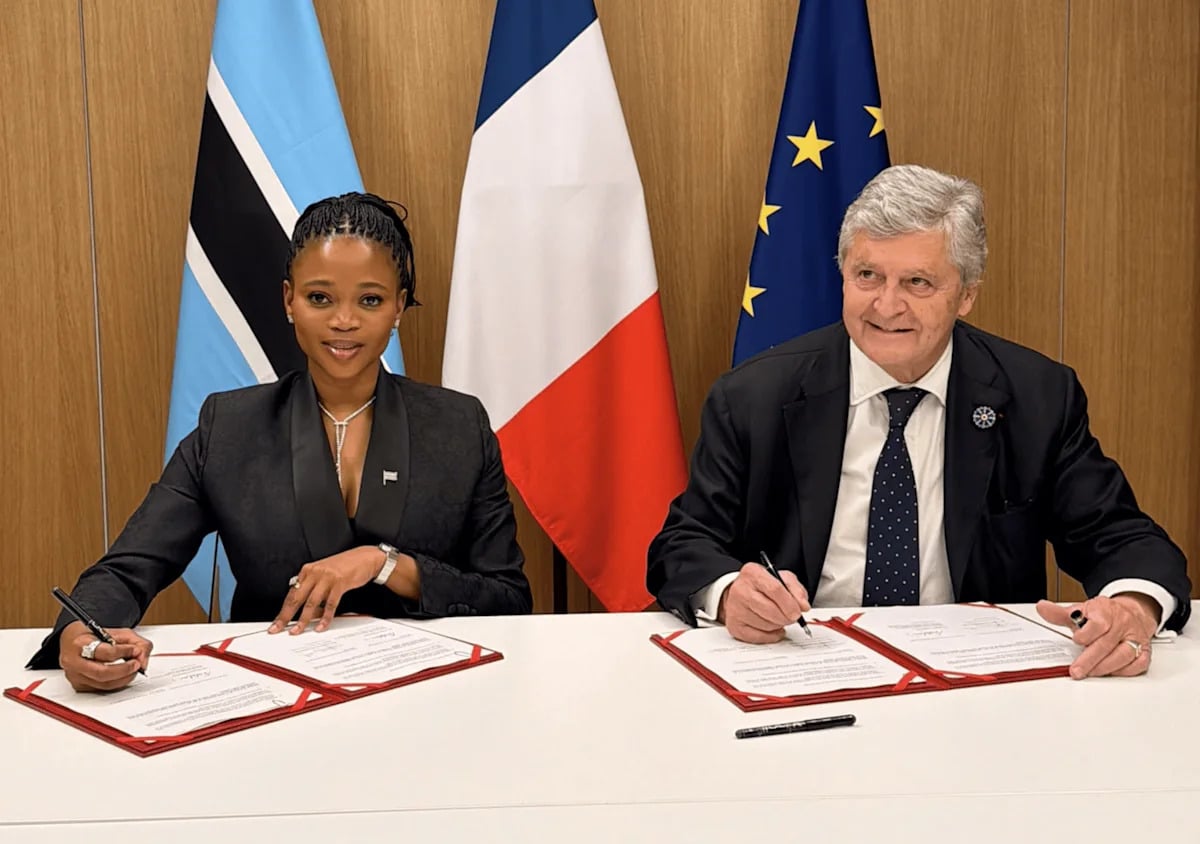
“The need for clear, accurate, and consistent terminology” anchors the Paris Declaration on Natural Diamonds, which France and Botswana signed on Nov. 10 at the Paris Peace Forum.
The text says the word “diamond” refers specifically to a natural diamond. Nicolas Forissier, France’s minister delegate for foreign trade and economic attractiveness, and Bogolo Joy Kenewendo, Botswana’s minister of minerals and energy, signed it on behalf of their governments.
The signing coincides with the 60th anniversary of Botswana’s independence and of diplomatic relations between the two countries, according to WWD’s report on the ceremony. The ceremony took place at the Musée de la Marine, where the Peace Forum was held. The declaration links the two governments with private-sector stakeholders across the natural diamond value chain.
The declaration recognizes the contribution of natural diamonds to producer economies. It also calls for responsible, transparent sourcing, supported through the Kimberley Process, and for standards on workers’ rights, health and safety, and respect for local communities.
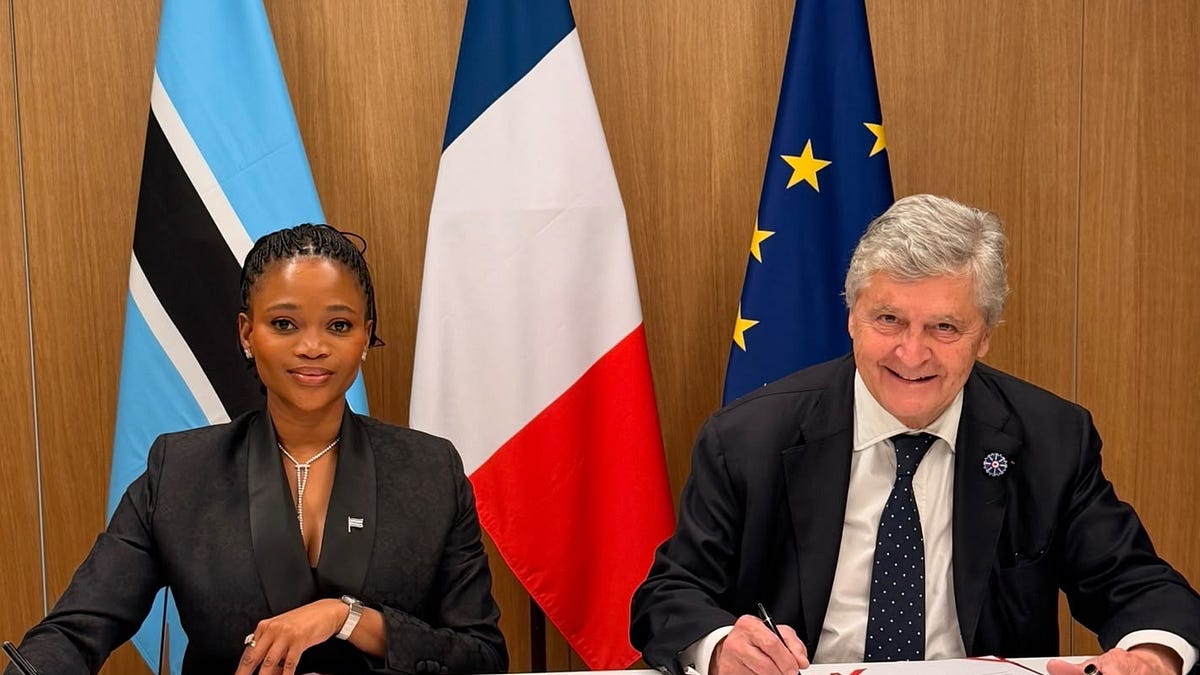
The two countries intend to set up a “joint working group” with private-sector representatives. That group would monitor implementation and publish annual progress reports starting in 2027. Other countries and industry stakeholders are invited to join, Instore reported, citing Rapaport.
Botswana President Duma Boko foreshadowed the deal a day earlier in Gaborone. In his Nov. 9 State of the Nation address, he said France had come on board to defend Botswana’s proposition that diamonds be reserved for the natural stone.
Boko also said that lab-grown stones “must not be called ‘diamonds.’” JCK reported that he wants the term “lab-grown diamond” replaced fully with “synthetic.”
Botswana plans to double its stake to 30 percent, and Boko endorsed a consortium led by former De Beers CEO Gareth Penny to acquire Anglo American’s 85 percent holding. Boko said Namibia and Angola would also take part, giving diamond-producing countries greater influence in the business. Botswana would become De Beers’ largest shareholder. De Beers said it welcomed “Botswana’s continued commitment to De Beers.”
It says the declaration reaffirms France’s 2024 ruling that the only acceptable descriptor for non-natural gemstones is “synthetic.” “An unqualified”diamond” is protected for the natural product, while “synthetic diamond” remains allowed.
Amber Pepper, CEO of the Diamond Collective, formerly the Natural Diamond Council, said in a statement:
It is a reminder that the value of a natural diamond extends far beyond its beauty, supporting livelihoods, communities, and economies in producing countries around the world.
Amber Pepper, CEO, Diamond Collective
Pepper added that diamonds also sit at the heart of France’s jewelry heritage, bringing together the rarity of the stone with generations of craftsmanship and expertise.
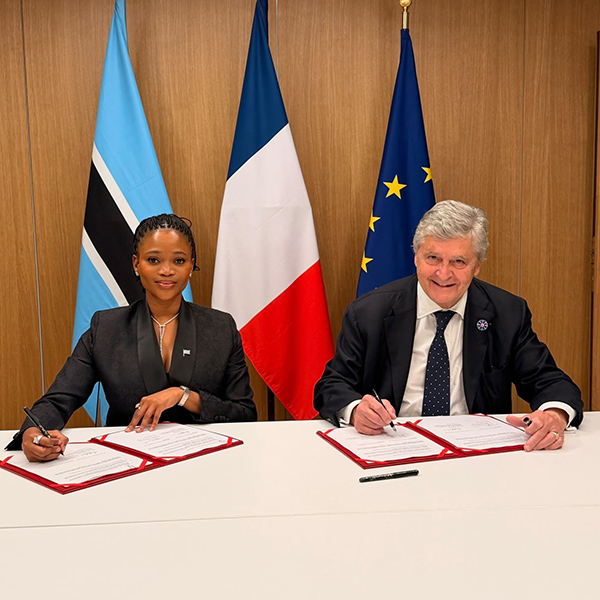
The Diamond Collective’s statement said the natural diamond industry supports the livelihoods of roughly 10 million people. It said 80% of a diamond’s value stays in its country of origin, helping finance infrastructure, healthcare, and education. It added that diamonds contributed 25% of Botswana’s GDP and 80% of its exports in 2023.
In September, CIBJO, the World Jewellery Confederation, affirmed “synthetic“for man-made diamonds in its Blue Books. JCK said CIBJO recommended”synthetic” as the sole descriptor for lab-grown stones in September.
The Diamond Producers Council called CIBJO’s position “biased” and “deceptive” in October and urged jewelers to ignore it.
The first test of the declaration’s follow-through comes in 2027, when the working group is due to publish its first annual progress report.