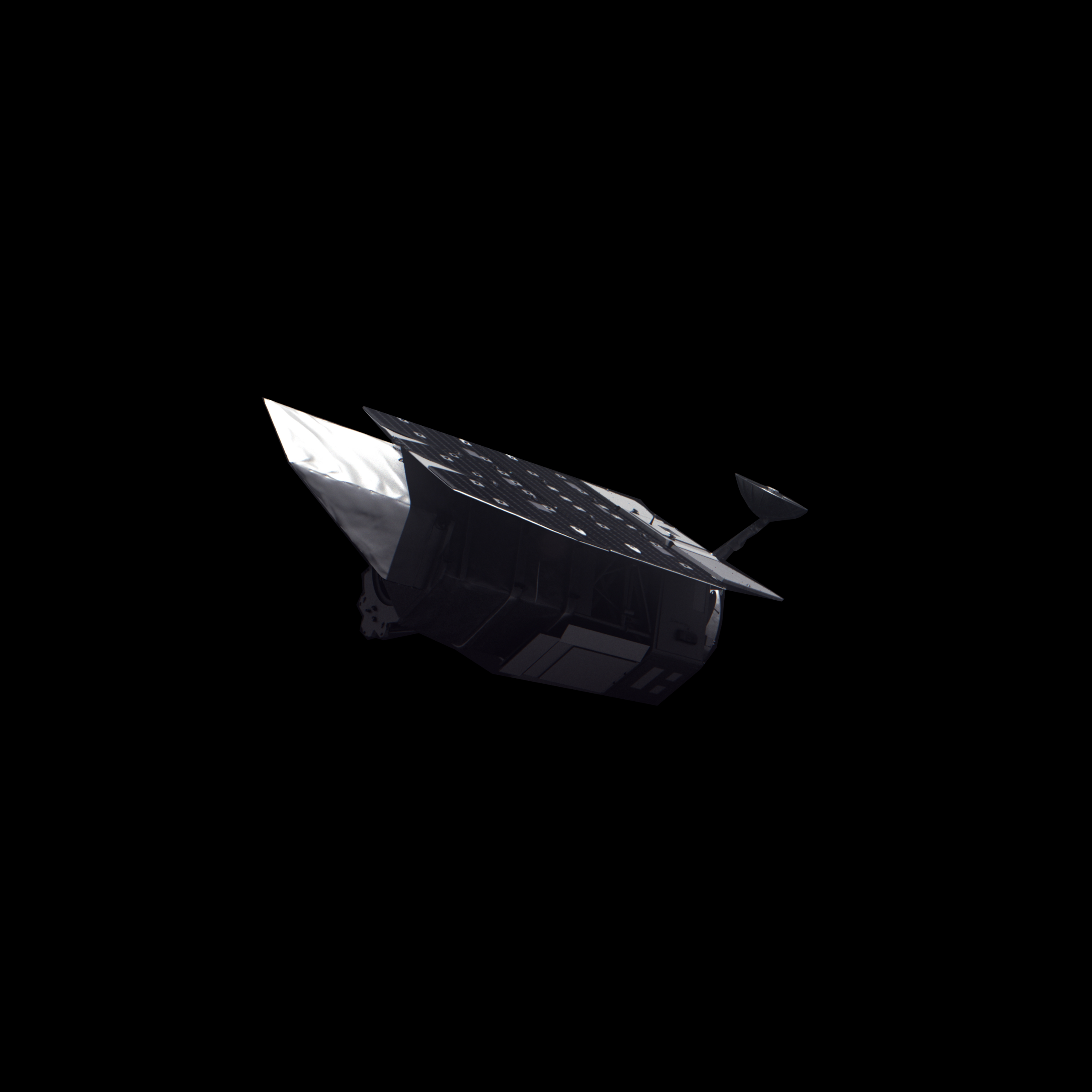
NASA’s Roman Space Telescope fired its first mid-course correction on August 31 using just 18 kilograms of fuel against a 200-kilogram budget, an accuracy that, combined with launch-day fuel surplus, could stretch its planned 10-year mission to at least 22 years, the agency reported September 14.
Roman launched on a SpaceX Falcon Heavy on August 30 and is roughly three months into its trip to the Sun-Earth L2 point, nearly a million miles out. The telescope’s first course correction, executed the next day, hit its mark with better than 99 percent accuracy while burning only about 40 pounds of propellant instead of the 441 pounds engineers had set aside, according to NASA’s September 14 mission update.
Three Separate Fuel Wins Add Up to a Doubled Lifespan
Roman was built for a five-year primary mission plus a possible five-year extension — a 10-year fuel budget from the start. NASA now says three distinct savings, each worth roughly four years, push that ceiling to at least 22.
The first gain came from the accuracy of the August 31 burn itself. The second came from the spacecraft’s weight: engineers had budgeted fuel around a conservative maximum of 21,605 pounds (9,800 kilograms), but Roman’s actual launch mass was 17,760 pounds (8,056 kilograms), well below that ceiling. That let technicians fill the propellant tanks to capacity rather than only to the 10-year requirement. The third gain is still projected rather than banked: because the first correction placed Roman so precisely, the team expects the upcoming second mid-course burn, now planned for later this month, and the subsequent orbital insertion near L2 in early December to also cost less fuel than allocated.
From Instagram — related to roman space telescope fuel, NASA Goddard Space Flight
As a result of exquisite planning by our orbital dynamics team, brilliant execution by the operations team, and a precise launch from SpaceX, Roman has fuel for at least 22 years of potential science operations.
Jamie Dunn, center director, NASA Goddard Space Flight Center
The Roman propulsion lead, Alison Rao, framed the underlying logic: mission planners set fuel budgets against a worst-case spacecraft mass so they don’t come up short, then adjust once the real hardware is weighed and tested. Spacedaily’s account of the numbers underscores that the 22-year figure is a fuel horizon, not a guaranteed retirement date — Roman still has to complete its journey to L2, finish commissioning, and stay mechanically healthy for that math to hold.
The Wide Field Instrument Comes Online, Detector by Detector
While the fuel numbers were being tallied, engineers were flipping switches on Roman’s main camera. The Wide Field Instrument, a 300-megapixel infrared sensor built to survey huge patches of sky with Hubble-level sharpness, spent about 10 days drying out at a relatively warm minus 85 Fahrenheit before the team could proceed, according to NASA’s Roman blog.
Nancy Grace Roman Space Telescope: Wide-Field Infrared Maps Explained
On the morning of September 11, engineers switched off the instrument heater and let the WFI cool to minus 225 Fahrenheit, cold enough to activate its 18 infrared detectors — a combined sensing area about the size of a laptop screen. That night the calibration system came on; the next morning, test data started flowing to engineers on the ground. Saturday brought a check of the element wheel, the system of filters and prisms that splits incoming light into individual colors, tested in zero gravity for the first time. By Sunday morning, the focus mechanism checked out too, even as the detectors kept cooling toward their final operating temperature of roughly minus 300 Fahrenheit.
After years of effort to build and test the instrument on the ground, we now have confirmation that it is operational in space. This is a huge milestone for the team at Goddard, our industry teams at BAE Systems, Inc. and Teledyne, and our science centers. There is much to do, but we are on our way to groundbreaking science.
Josh Schlieder, Wide Field Instrument scientist, NASA Goddard Space Flight Center
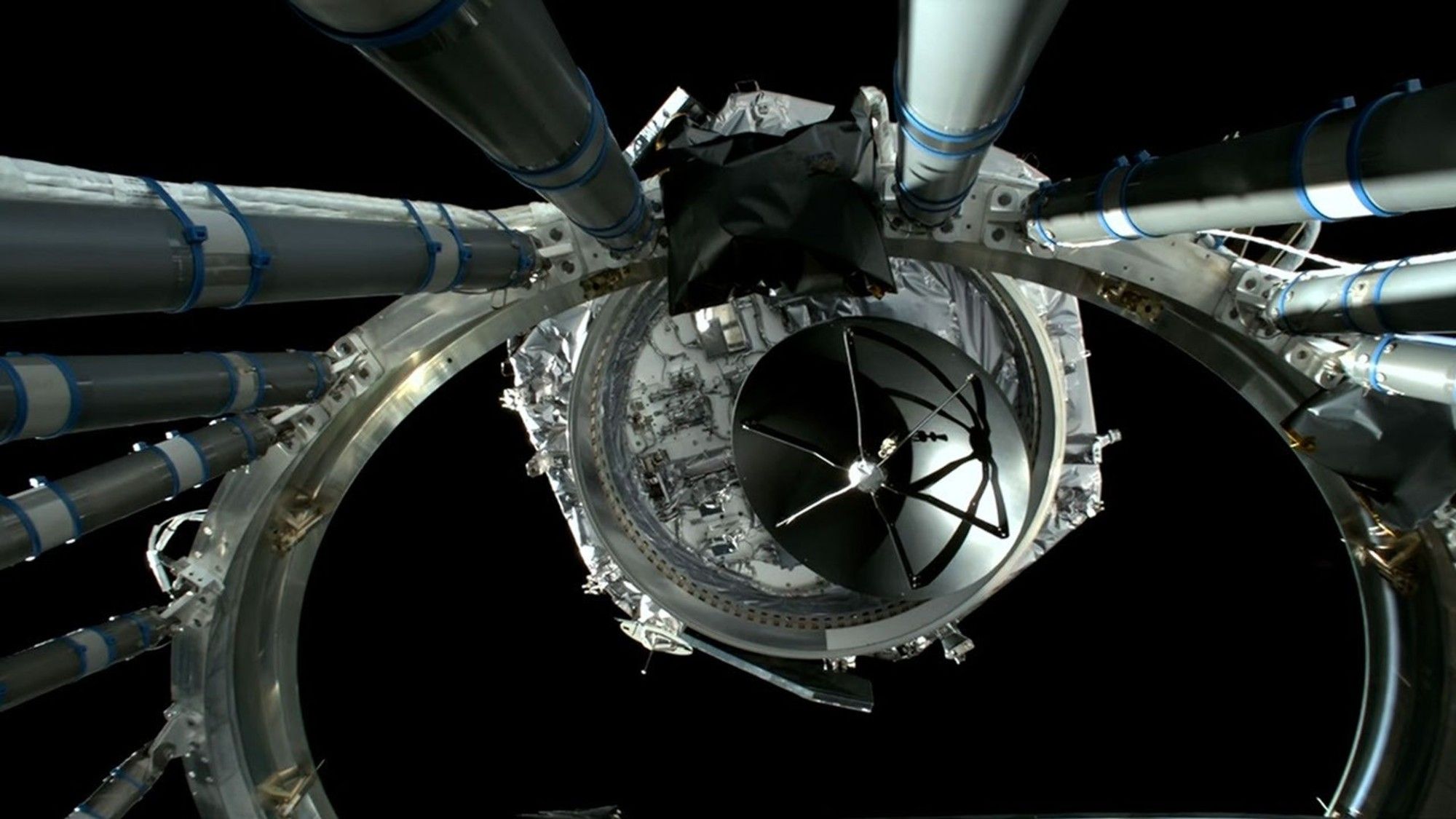
Kshatriya described the detector checkout in blunter terms to Ars Technica, noting the telescope opened its aperture cover on September 1, letting starlight hit its primary mirror for the first time.
All the preliminary checks are good. In fact, we got some data on the Wide Field Instrument just a couple days ago. All the mirrors, all the CCDs are chilling down in the right way. We do false current tests to make sure that we’re getting the right connectivity, etc. All that’s green across the board on all 18 (detectors), which is awesome.
Kshatriya, via Ars Technica
The Coronagraph Passes Its First Remote Handshake
Roman’s second major instrument, the Coronagraph, is built to block a star’s glare and reveal the faint reflected light of orbiting planets — a technology demonstration NASA calls the most advanced of its kind ever flown. Operators at the Coronagraph Commanding Center at Caltech/IPAC in Pasadena confirmed they could remotely control every piece of the hardware: software, thermal systems, mechanisms, cameras, and avionics.
Photo: Space
The test also verified the thermal system could warm the instrument to 72 degrees Fahrenheit, near room temperature and far warmer than the WFI’s operating range, chosen to match the deformable mirrors’ material properties and simplify testing. Now the instrument sits idle with its detectors warm, a deliberate step meant to shed any residue left from the ground.
Now that this test is complete, we’ve been decontaminating: sitting idle with our detectors warm so anything that’s stuck to the surface, such as water or trace chemicals, will tend to leave it.
Eric Cady, optical engineer leading commissioning efforts for the Roman Coronagraph, NASA Jet Propulsion Laboratory
Space.com reported that coronagraph decontamination will run for 30 days alongside periodic checks, filling out much of Roman’s remaining journey to L2. Kshatriya, speaking to Ars Technica, put the coronagraph’s early performance simply: When we get first light, it’s going to be a big party.
A Grapple Fixture for a Servicing Mission That Doesn’t Exist Yet
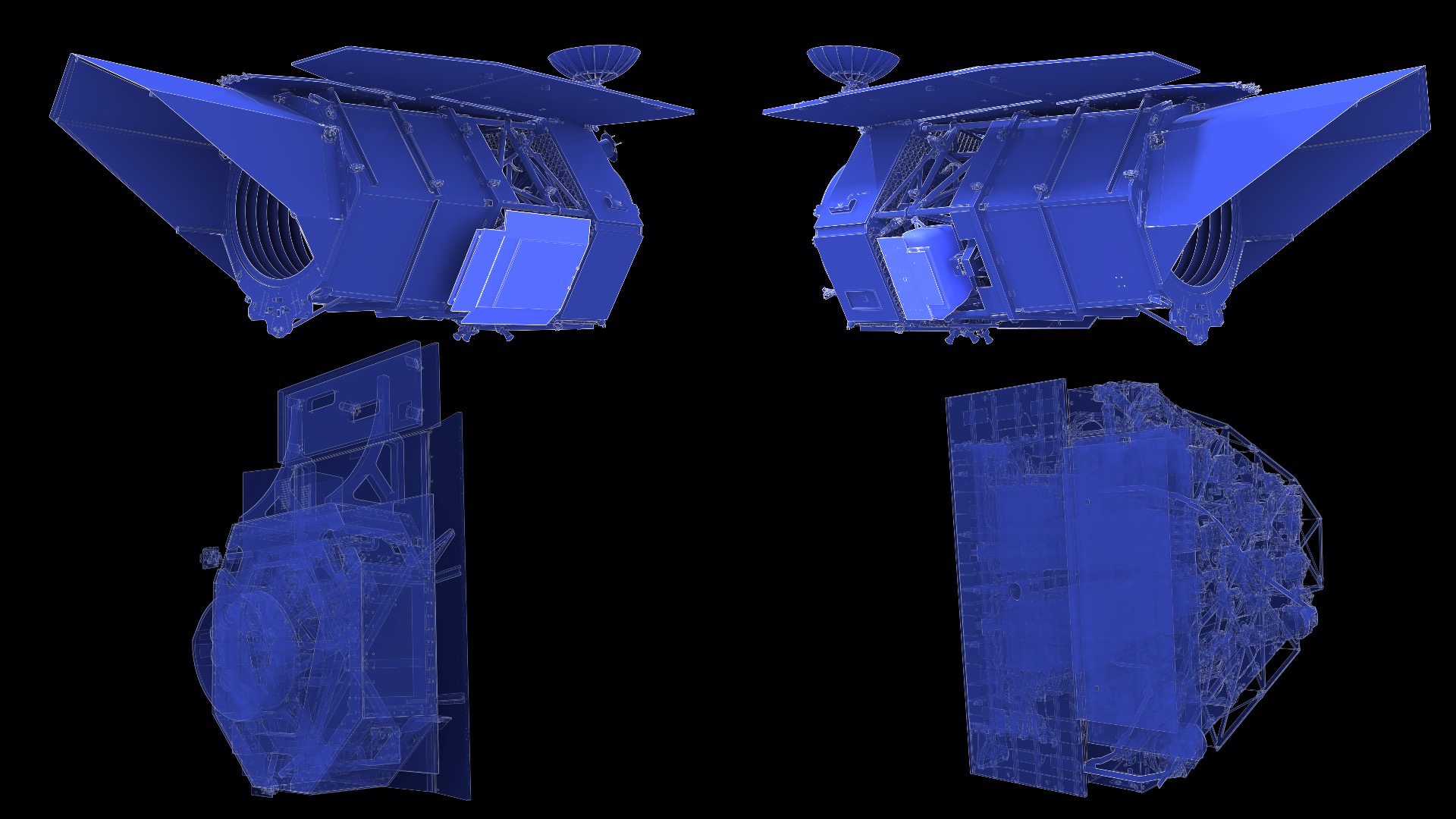
Roman’s design carries a detail that has nothing to do with imaging exoplanets: a grapple fixture bolted to the bottom of the spacecraft, similar to hardware used by robotic arms on the International Space Station and the Space Shuttle, according to Ars Technica’s reporting. The telescope also carries a retroreflector and external reference points meant to guide a future robotic servicer during final approach.
FIRST TEST IMAGE From Nancy Grace Roman Space Telescope | Mission Updates
While Roman is nowhere near as serviceable as the Hubble Space Telescope was, we do have everything that’s necessary to enable the rendezvous and capture and docking with a hypothetical servicer; that’s the point of the grapple fixture. Then, in 2020, when we were baselined, we were told that we would focus on refueling. So the blanketing around the fueling port has been designed especially so that it’s easier for a robot to get in there if we needed to refuel.
Photo: NASA
Jackie Townsend, Roman project manager, NASA Goddard
No spacecraft capable of reaching Roman’s position, roughly a million miles from Earth, currently exists. Several U.S. companies are developing refueling satellites, but those efforts target low-Earth and geosynchronous orbit, primarily for the U.S. Two Chinese spacecraft docked last year to conduct the first satellite-to-satellite refueling in geosynchronous orbit, though nothing built today could travel as far as L2 to reach Roman.
The grapple fixture and magnetic fuel-port blanketing exist for a mission NASA hasn’t scheduled and no company can yet fly. For now, the near-term calendar is firmer: a second, smaller course-correction burn later this month, orbital insertion near L2 in early December, and first science images targeted for early 2027.