Oscar-winning documentarian Alex Gibney transformed from a Tesla-driving admirer into a vocal critic while working on his documentary Musk. The film examines the tech mogul’s vast influence across rockets, artificial intelligence, and politics while drawing fierce legal threats and public attacks from Elon Musk.
Back then, the director had Tesla solar panels installed on his home and appreciated both the billionaire’s sustainable energy businesses and what he describes as his awkward charm and digital interactions with everyday citizens.
Drawing on interviews with individuals including Musk’s family and former friends, the filmmaker traces the tech entrepreneur’s rise and the mythology that grew with it, presenting the billionaire as a real-life Tony Stark who would conquer space and help save humanity. Among the people who consented to be interviewed was Musk’s first wife, Justine, who first crossed paths with him during their student days at Queen’s University in Canada. She shared with Gibney that she felt magnetically pulled toward Musk’s extraordinary self-assurance — the deep-seated impression that whatever goal he stated he would accomplish, he managed to bring to fruition. The more the filmmaker thought about him as a confidence man in all of the meanings of that term, the more her description resonated.
Musk Attorney Alex Spiro Issues Defamation Warnings
The lead-up to the film’s release brought controversy, including legal pushback from Musk’s camp. Attorney Alex Spiro sent a letter to Gibney’s production company, Jigsaw Productions, zeroing in on a sequence involving Ashley St. Clair, a former MAGA influencer who had a child with the billionaire.
In the documentary, St. Clair describes text messages sent by Musk on October 6, 2024, ahead of the presidential election. Musk texted her that he felt optimistic about Donald Trump winning because “tomorrow we unleash the anomaly in the matrix,” adding that he planned on tapping lasers
from space and claimed to have over 10,000 lasers in orbit. When Gibney asked St. Clair whether those texts referred to SpaceX satellites, she replied that she did not know where else he possessed lasers.
The letter asserted that Starlink satellites communicate via laser inter-satellite links and warned the production company that the insinuation was false, adding that the material refuting it was public and that the filmmakers chose not to be told the rest.
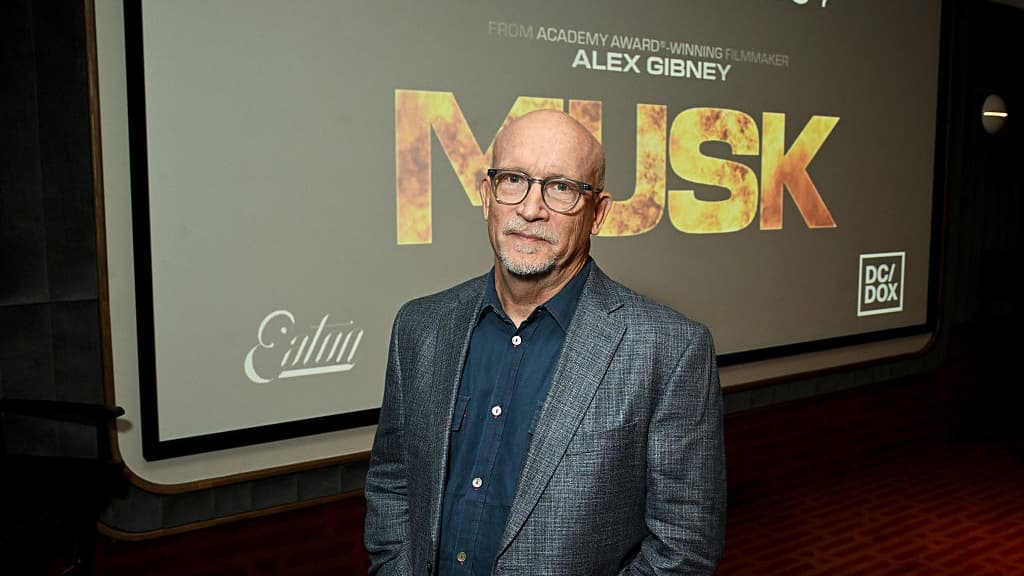
“We don’t claim that he changed votes in the 2024 election. All we do is to show that he was bragging to his lover that he had special access to understanding the outcome of the election in a way that other people didn’t.”
Alex Gibney, via NPR
Gibney Employs Digital Avatars For Four-Hour Runtime
Clocking in at a running time of 236 minutes with an intermission, the documentary combines archival footage, interviews, and unconventional aesthetic choices. Lacking an interview with Musk himself, Gibney and his team utilized artificial intelligence tools to create a digital avatar that appears throughout the film and delivers real-life quotes drawn from Musk’s past public statements, interviews, and podcast appearances, with press notes clarifying that AI tools were used solely to get the hand-designed avatar to speak in sync with the actual audio.
Reviewers and critics have noted that the project traces a trajectory from the disruptions of the coronavirus pandemic to Musk’s takeover of the platform formerly known as Twitter and his involvement in the political sphere, including his overseeing of the short-lived Department of Government Efficiency, alongside touchpoints on Tesla, SpaceX, and his acquisition of Twitter.
Director And Billionaire Clash On Social Media And Festival Screens
Gibney responded in interviews by characterizing Musk as a figure who serially inflates his role as the sole driving force behind companies like Tesla and SpaceX, noting that individuals feared being sued given Musk’s self-description as a free speech absolutist.