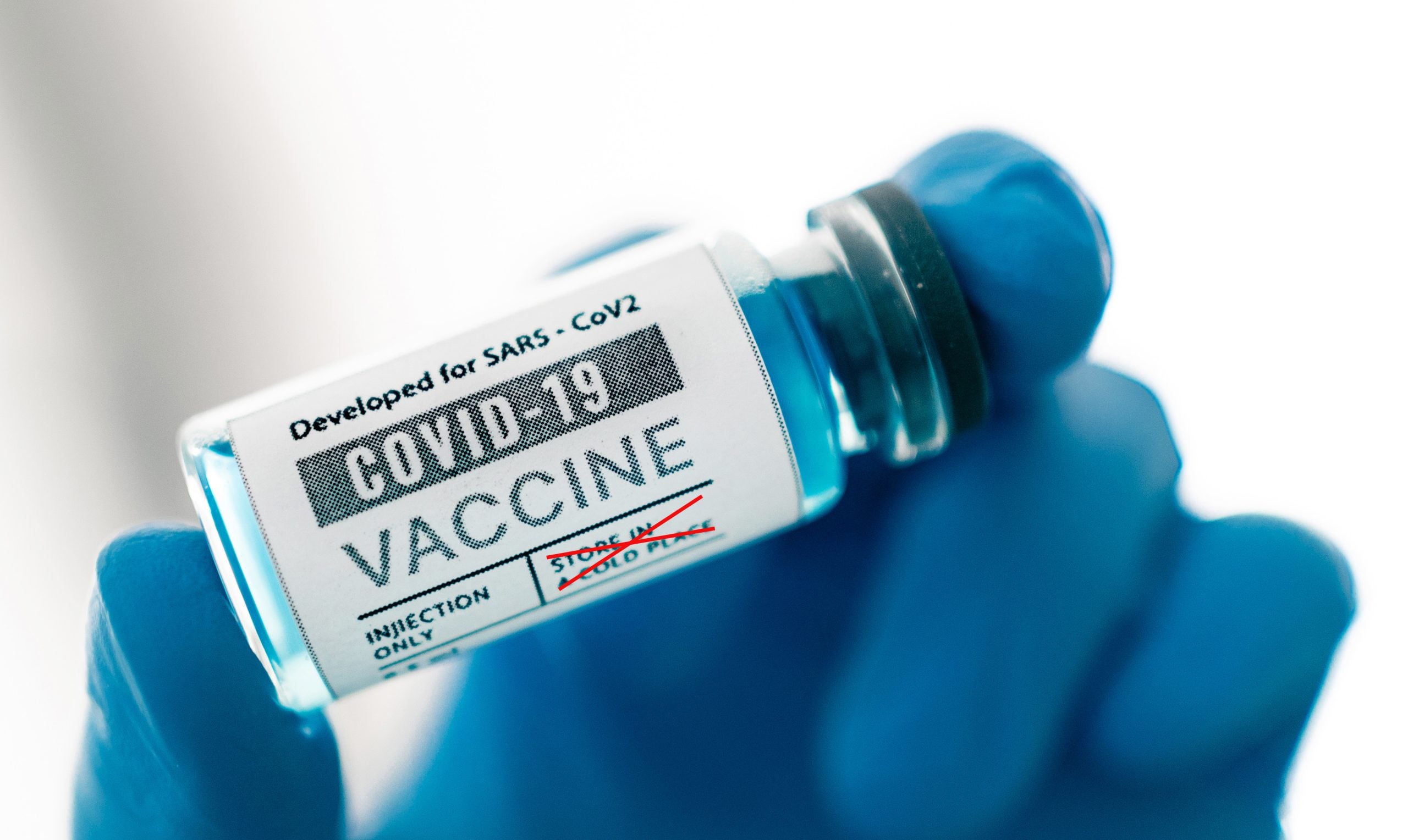
MIT researchers stabilized mRNA-lipid nanoparticle vaccines using an AI system called AGENT, keeping formulations bioactive for two months at 37°C and up to a year at room temperature, according to a study published in Nature Biotechnology on September 28, 2026. Mice given the reformulated shots showed immune responses matching fresh vaccine.
The formulation problem behind every mRNA vaccine ever shipped is simple: the lipid nanoparticles that ferry the RNA into cells are fragile, and they degrade unless kept between -20 and -80 degrees Celsius. That constraint has shaped everything from vaccine distribution in low-income countries to how clinical trials get designed. A team at MIT’s Koch Institute, working with the university’s Computer Science and Artificial Intelligence Laboratory, says it has found a way around it — not by re-engineering the nanoparticle, but by rethinking what surrounds it.
The paper, led by graduate student Jinbi Tian and postdoc Khanh Tran under senior authors Ana Jaklenec and Robert Langer, appeared in Nature Biotechnology on September 28. It describes an algorithm called AGENT — Algorithm-Guided Experimental design for lipid Nanoparticle Thermostabilization — that combines high-throughput lab screening with Bayesian optimization, a machine-learning technique built to draw strong conclusions from small datasets rather than exhaustive trial and error.
Room Temperature for a Year, 37°C for Two Months
The headline numbers, confirmed across MIT’s own reporting and Inside Precision Medicine, are stark: the solid-state mRNA-LNP formulations retained full bioactivity after more than two months at 37°C, and remained stable at room temperature for up to a year. Mice vaccinated with the reformulated Covid-19 shots — built on particles similar to Moderna’s — generated immune responses statistically indistinguishable from freshly made injectable vaccine.
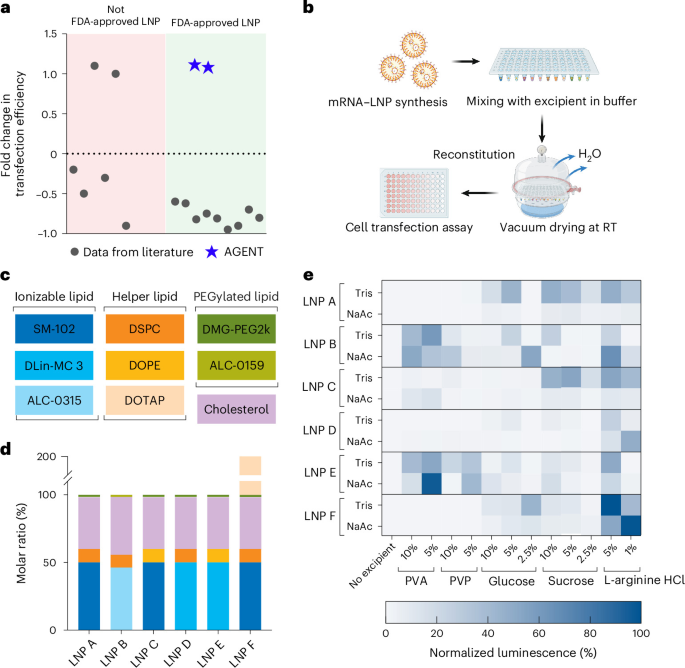
Crucially, the team didn’t touch the lipid nanoparticle itself. Instead, they focused entirely on the excipients — the sugars, salts and polymers mixed in around the particle to protect it during drying and storage. Changing the LNP chemistry raises new safety and immunogenicity questions; changing what surrounds it, in theory, doesn’t. Inside Precision Medicine reports the strategy worked on two clinically relevant LNP compositions representative of those used in the Moderna and Pfizer-BioNTech COVID-19 vaccines
, which Clinical Trial Vanguard specifies as the SM-102 and ALC-0315 lipid systems underlying those two shots.
Why the Team Turned to an Algorithm After Getting Stuck
Before AGENT, the researchers tried the conventional approach: reuse excipients that had worked in earlier MIT projects on polymer-stabilized LNPs. It didn’t work.
We were trying to use and screen excipients that we’ve previously used successfully to stabilize LNPs, but it just wasn’t working. It was really frustrating for the team.
Ana Jaklenec, principal investigator, MIT Koch Institute
Jaklenec describes the team as really getting stuck,
which pushed them toward CSAIL and a machine-learning approach built specifically to work with limited experimental data. Screening nearly 50 FDA-approved excipients by hand, one variable at a time, would have taken months. Inside Precision Medicine reports AGENT completed its optimization in six iterations within one month.
The real beauty of this algorithm is that we can use it with small data sets. It’s really hard to run thousands of experiments, so this algorithm allows us to more easily achieve formulations with features that we want — in this case, stability.
Ana Jaklenec, MIT Koch Institute
Mina Konaković Luković, an assistant professor at CSAIL and a co-author, said her lab’s automated-design algorithms had never before been tested on a biological stability problem. It was surprising to see how quickly the algorithm converged on a stable formulation — getting there in just a handful of iterations, rather than the exhaustive search that would normally be required,
she said, according to Tech Explorist.
How the Screening Actually Worked
The process moved in two stages. First, researchers tested each of the roughly 50 excipients individually, packaging them into LNPs carrying mRNA that codes for firefly luciferase — a protein that glows when a cell successfully receives and translates it. The brightness of the glow told them how well each excipient protected the mRNA.

From that screen, the team picked five of the strongest candidates and let AGENT predict which combinations and ratios would stabilize Moderna-like LNPs best. Two formulations at a time went back into cells; results fed back into the algorithm; the algorithm generated its next best guess. That loop repeated until the formulation converged — a process Inside Precision Medicine says the study’s authors described as compressing development from months or years to days.
The findings extend past Covid-19 shots. Tian told Tech Explorist the approach broadens the application of not only mRNA vaccines, but also therapeutics or advanced drug-delivery platforms like controlled-release particles or microneedle patches,
and the team says its algorithm also stabilized formulations resembling Pfizer’s vaccine, pointing to broad applicability across mRNA platforms rather than one product.
Microneedle Patches and the Cold-Chain Cost Question
Because the new formulations are water-free and solid-state, they can be packed into dissolvable microneedle patches — a delivery format that skips needles and syringes entirely. Inside Precision Medicine reports the team achieved the first demonstration of mRNA vaccine delivery by microneedle patch in nonhuman primates,
with immune responses in rodents and nonhuman primates that were noninferior to freshly prepared injectable vaccine.
The economic case is where the outlets diverge in emphasis. Inside Precision Medicine cites the study authors’ estimate that thermostable vaccines could cut storage costs by 71% to 86% and wastage costs by at least 50% — figures tied specifically to removing cold-chain infrastructure from distribution. Clinical Trial Vanguard, writing for a clinical-trials audience, frames the same underlying result as a structural shift for research design rather than a manufacturing-cost story, arguing that removing the ultra-cold requirement reopens trial participation to community pharmacies, mobile units and rural sites that lack ultra-low-temperature freezers.
What the Study Itself Flags as Unresolved
The result is preclinical. It has not been tested in a human trial, and Inside Precision Medicine reports the researchers observed structural changes called blebs
forming in reconstituted LNPs after storage, noting that standardized methods will be needed to determine how those changes affect product quality and performance.
Regulatory scrutiny is the other open variable. Clinical Trial Vanguard points to the FDA’s January 2025 draft guidance, Considerations for the Use of Artificial Intelligence To Support Regulatory Decision-Making for Drug and Biological Products,
which directs sponsors to document how AI-generated data shaped product-development decisions. The outlet argues that a Bayesian-optimization log like AGENT’s produces exactly that kind of documented decision trail, though it also notes that FDA reviewers evaluating an investigational new drug application’s chemistry, manufacturing and controls section may not yet be equipped to assess one.
None of the five sources describing this study report a timeline for human trials or say whether Moderna, Pfizer or BioNTech have responded to the findings.