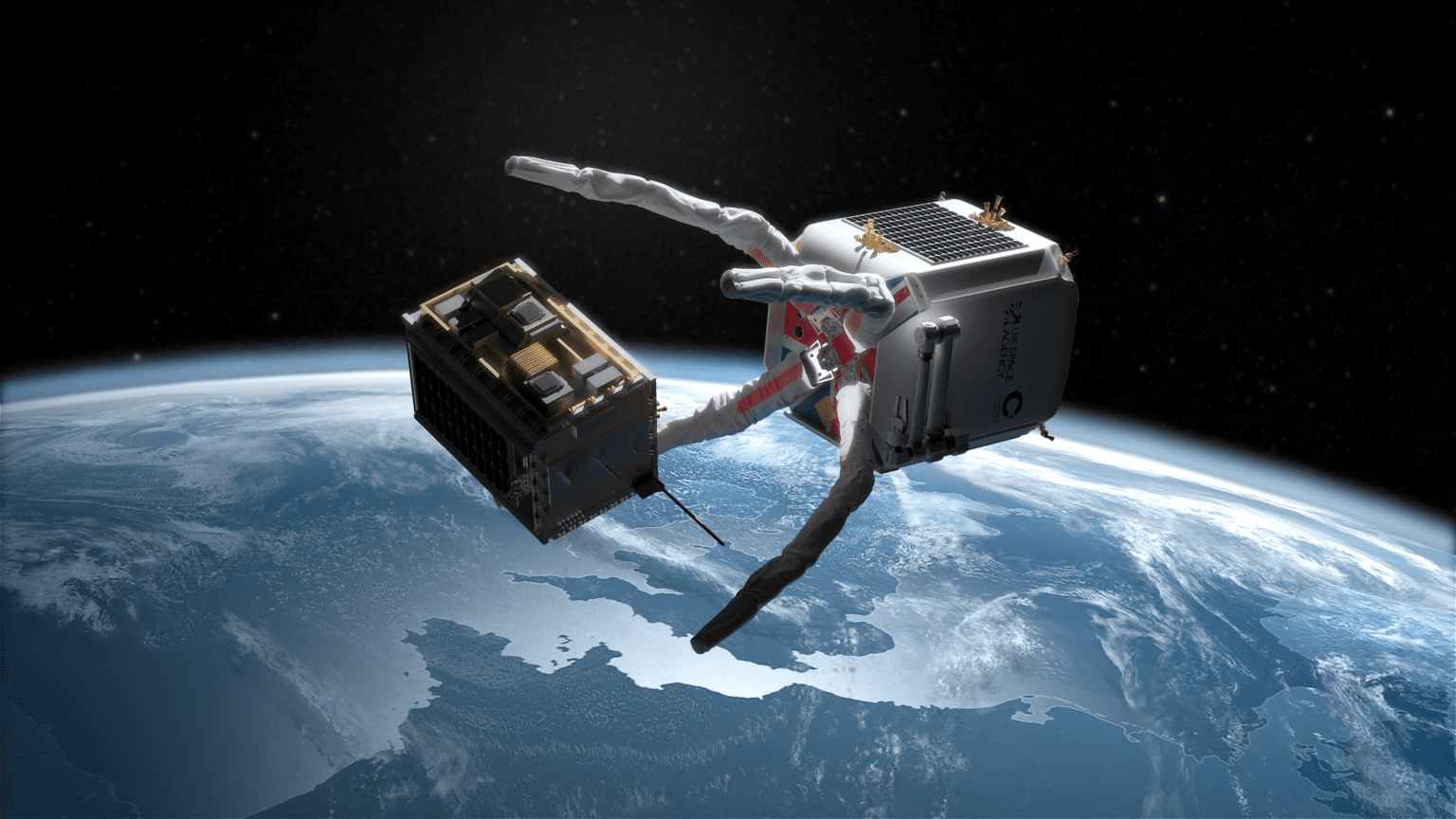
ClearSpace has signed a contract with the European Space Agency to fund the next phase of Phoenix, a spacecraft designed to dock with and extend the life of satellites in geostationary orbit, according to Aerospacetestinginternational and SpaceNews. The mission aims to extend the life of a geostationary satellite due to retire between 2028 and 2030, SpaceNews reported.
The Luxembourg-based in-orbit servicing venture announced the contract Sept. 23, according to SpaceNews. The new funding, channeled through the European Space Agency’s (ESA) Advanced Research in Telecommunications Systems (ARTES) programme, covers the next stage of maturing the mission architecture and the core rendezvous, proximity operations, docking and servicing technologies, according to Aerospacetestinginternational.
A docking system built for satellites never meant to be docked with
Phoenix is a servicing spacecraft that would rendezvous with and dock to an operational satellite, then supply propulsion and attitude control to take over station-keeping and repositioning, according to Aerospacetestinginternational. The goal is to extend a satellite’s useful life and support end-of-life operations for assets already in geostationary orbit (GEO).
At the core of Phoenix is ClearSpace’s docking system, which must make a safe mechanical connection with a satellite that was never designed to be docked with. Reliable docking is the critical capability for life extension, letting the servicer supply propulsion and attitude control once attached.
Phoenix is the result of a shared ambition to make in-orbit servicing a practical and valuable capability for satellite operators.
Luc Piguet, CEO and co-founder of ClearSpace
ESA frames the deal as dual-use technology for Europe
Laurent Jaffart, ESA’s director of resilience, navigation and connectivity, tied the contract to broader industrial goals for the continent.
In cooperation with our Member States and European industry, we’re taking Phoenix to the next level by working to mature the dual-use technologies that will deliver clear benefits for sustainability, resilience, and the competitiveness of Europe’s space industry.
Laurent Jaffart, ESA’s director of resilience, navigation and connectivity
The wider Phoenix programme is estimated at about €100 million (around US$110 million), according to Aerospacetestinginternational. Earlier Phoenix work was funded by the Luxembourg government and the Luxembourg Space Agency.
Northrop Grumman already proved the concept — with a different approach
Life extension in orbit isn’t new. Northrop Grumman’s SpaceLogistics flew its Mission Extension Vehicles, MEV-1 and MEV-2, which docked with Intelsat satellites in 2020 and 2021 and provided years of propulsion and attitude control before undocking in early 2025, according to Aerospacetestinginternational. The company followed up in 2026 with a robotic Mission Robotics Vehicle that installs propulsion “pods” on aging satellites.
The two companies aren’t solving the docking problem the same way. Where Northrop’s MEV design inserts a probe into a client satellite’s main engine nozzle, ClearSpace is developing its own docking system so it can service a wider range of satellites, and give Europe an indigenous in-orbit servicing capability it currently lacks, according to Aerospacetestinginternational.
Before Phoenix reaches geostationary orbit, a smaller test mission flies first
ClearSpace isn’t jumping straight to a live satellite rescue. Before Phoenix targets a satellite in geostationary orbit at about 22,000 miles (36,000km), it and ESA will fly the Prelude mission to test close-up autonomous navigation between two smaller spacecraft, according to Aerospacetestinginternational. Prelude is scheduled to launch in 2027, with an expected operational duration of 7 to 12 months once in orbit.
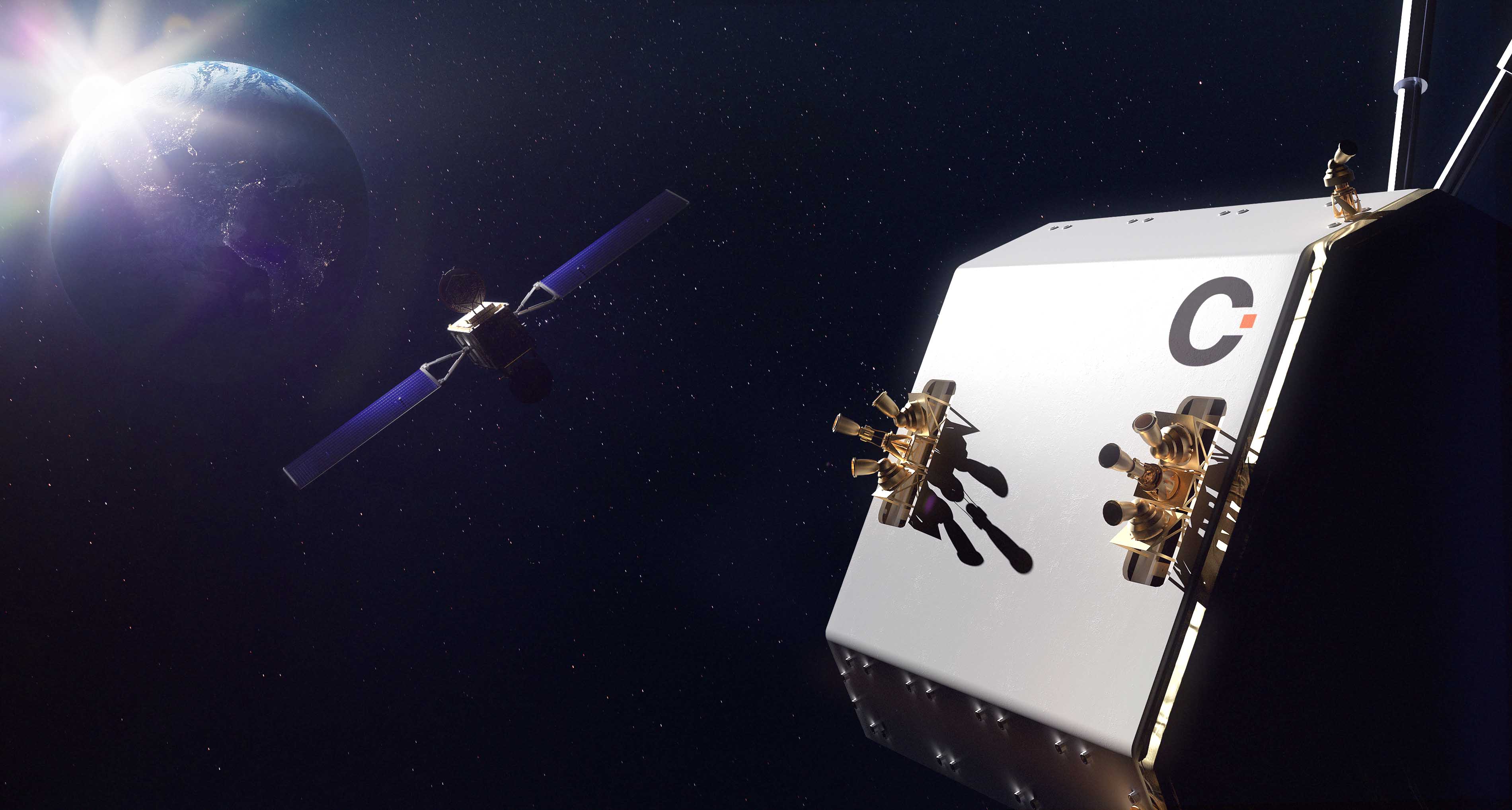
That timeline matters against the clock on the actual target: SpaceNews reports the geostationary satellite Phoenix aims to service is due to retire between 2028 and 2030. Phoenix sits within ClearSpace’s in-orbit servicing portfolio, alongside its active debris removal and inspection work, according to Aerospacetestinginternational.