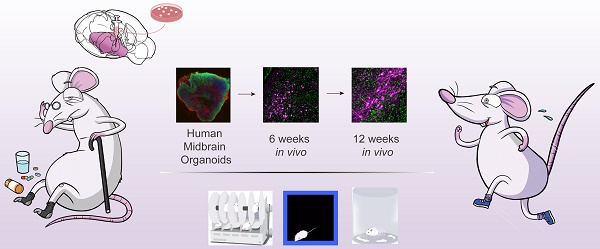
The team, led by Sergiu Pașca, genetically engineered mice to be born with almost no cerebral cortex or hippocampus, creating space inside the animals’ skulls for human brain tissue to grow. The cortex, sometimes called grey matter, handles higher-level thinking, memory and the senses, the BBC reported.
Human Brain Cells Grown Inside Mice Missing Their Cortex
From Skin Cells to Brain Organoids
To build the transplanted tissue, scientists took skin cells from human donors and reprogrammed them so they grew into brain-like structures known as organoids — clumps of connected, living cells rather than whole brains grown in a dish. According to the Guardian, the newborn mice received several injections, each containing about 100,000 human brain cells, into the cavity left by the missing mouse brain tissue. In total, the mice lacked roughly 14 million mouse brain cells and ended up with about 4 million human ones, amounting to roughly half the brain by volume.
The underlying study, published in Nature, describes organoids transplanted at 30 to 60 days in vitro into pups aged five to 17 days old, with a median age of 10 days — a stage chosen because it precedes the period in mouse development when neural connectivity becomes shaped by activity.
Wiring Into the Mouse Brain
Once implanted, the human cells divided and organized themselves into the mouse’s existing brain circuitry, connecting with the rest of the animal’s brain and spinal cord, the BBC reported. Three months after surgery, the human tissue had linked up to the mouse’s blood supply and had nearly filled the cavity, according to the Guardian. The human neurons were not wired in the same way as they would be in people, and the tissue remained immature — roughly equivalent to a stage found halfway through human pregnancy.
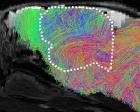
The cortex that formed was imperfect. Normal cortex develops in organized, structured layers, but neuroscientist Dr Ilary Allodi described scans of the human-mouse brains as looking “a bit messy,” per the BBC. After a few months, however, the human cells began to look and function more like the outer layer of a mouse’s brain.
Behaviour and Survival
The genetically engineered mice survived despite missing their cortex and hippocampus because the remaining parts of the brain took on new roles, the Guardian reported. While the animals looked normal, they were described as cautious on their feet and more forgetful.
About six months after surgery, researchers ran the mice through basic behavioural tests, observing them in a small table-top arena. Pașca said the mice performed largely as [the normal] mice did,
adding, They don't have any enhancement.
Ethical Questions
The work is the latest from the field of neural organoids, in which lab-grown human brain cells assemble into small structures mimicking features of real brains. While potentially transformative for brain medicine, organoid research has raised ethical concerns, including whether such tissue could become conscious or feel pain, and concerns about the welfare of animals carrying it.
Pașca said the work had received extensive ethical oversight from the start. Emily Jackson, professor of law at the London School of Economics and chair of a recent report on neural organoids for the Nuffield Council on Bioethics, said animal welfare is a really important concern, and it will be necessary to closely monitor these animals in order to evaluate the impact on them.
Dr Sarah Chan, a reader in bioethics at the University of Edinburgh who was not involved in the research, told the BBC there was no indication that what's being created here are mice that can think like humans, or a human brain in a mouse body.
But she said the study prompts us to think about what it might mean when we start changing animal cognition,
adding: How can we know what it's like to be one of these mice? And how do we take account of that in the ways that we treat laboratory animals?
The Stanford team had previously transplanted human neurons into rat brains, where the tissue took root and wired into the animals’ circuits but had too little room to grow substantially. The new mouse model was designed to overcome that limitation.