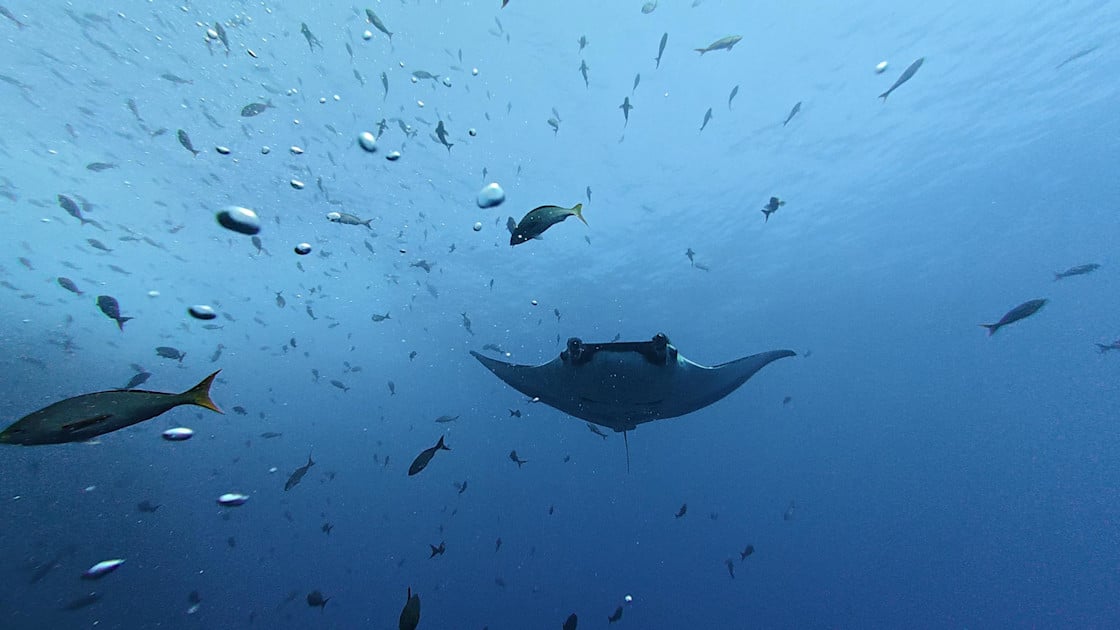
Giant manta ray pups in Central America stay in shallow coastal waters until they are large enough to face open-ocean predators, according to a study in Frontiers in Fish Science. Adults then migrate far beyond protected reserves, where researchers say legal protection drops to zero, and the authors call for multi-national conservation swimways.
Protection for the species will have to change. Marine reserves cover the nursery coasts, but the adults that leave them cross unprotected international waters. The authors say marine protected areas alone are not enough for such a mobile animal.
The study is described as the first to focus on giant manta ray movement in Central America. Frontiers and Popular Science both quote the same statements from Madrigal-Mesén, who is project leader of Mantas Costa Rica, so the coverage amounts to a single account rather than independent confirmation. Popular Science calls Madrigal-Mesén a study co-author and project leader of Mantas Costa Rica, while the Frontiers text does not say whether he is lead author.
Madrigal-Mesén said the findings show that the lifestyle of manta rays is not a one-size-fits-all behavior, and that giant mantas in Central America undergo a dramatic change in space use as they mature.
Three Tracking Tools Yield 12,000 Detections
The team worked at five locations between 2018 and 2025. Acoustic telemetry, which relies on underwater sound pulses, followed fine-scale movements of 59 individuals around coastal sites such as cleaning stations. Satellite telemetry followed large-scale movements of 12 individuals. Photo identification told individual rays apart.

The combined dataset topped 12,000 detections. Popular Science quotes the team as saying that combining these tools turned fragmented data into a unified, undeniable story.
If we hadn’t used all three technologies together, we simply wouldn’t have been able to piece this puzzle together.
Jeffry Madrigal-Mesén, lead author
Pups Stay Inshore Until About Three Meters
Giant mantas (Mobula birostris) can reach nine meters long, with a seven-meter disc, and weigh up to 2,000 kg. Popular Science gives the same maxima in imperial units, up to 30 feet and 4,409 pounds. Adulthood arrives at roughly eight to ten years, and size leaves them few natural enemies.
Pups lack that cover. Several shark species and orcas hunt the open ocean.
Young mantas, those with discs of about three meters or less (roughly 10 feet, per Popular Science), stuck to shallow coastal refuges. Those waters do not overlap with predators’ hunting grounds, and they offer food, hiding places and reef cleaning services. Madrigal-Mesén said the same individuals turn up more often than once a year
, and that some were recently sighted again at the exact tagging location.
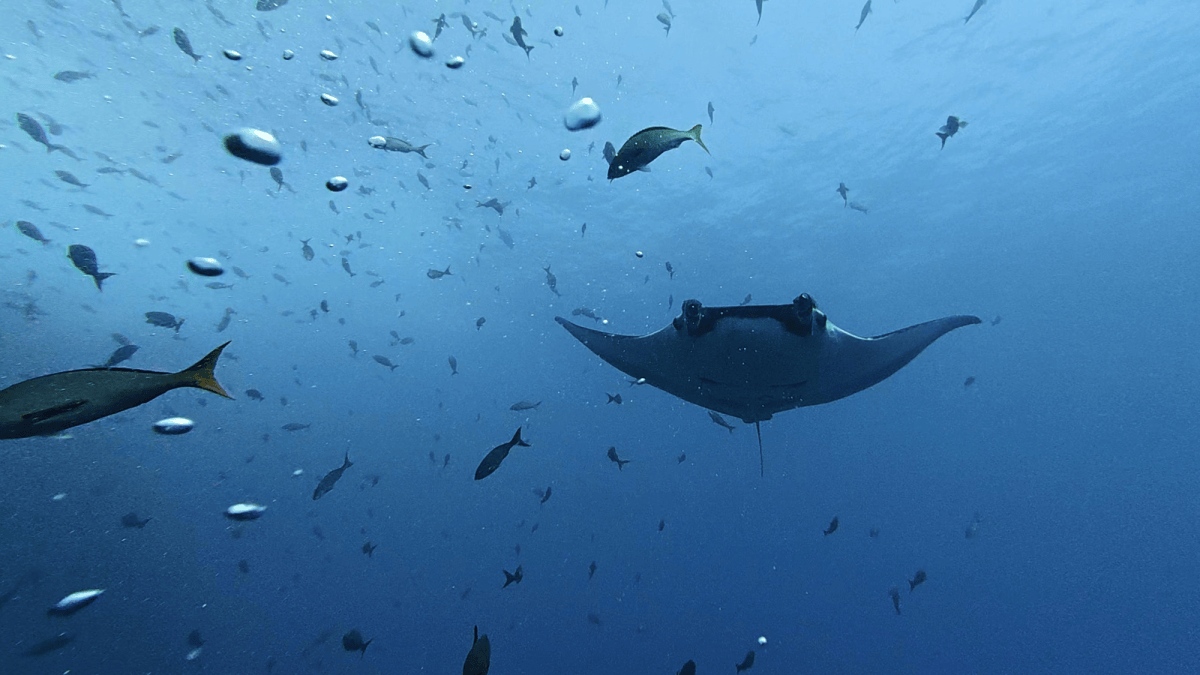
Madrigal-Mesén said juveniles remained strictly within shallow nearshore waters, while most tracked adults made long-distance transboundary migrations along the continental shelf break.
Mickey Mouse and nine adults take to the shelf break
Nine mature mantas undertook long migrations along the continental shelf break. One, nicknamed Mickey Mouse for a spot pattern on his belly, was unusually approachable, so scientists tagged him several times over the years. In 2020 he logged 462 acoustic detections at the coastal hub El Secreto. In 2023 he returned to the same shelf and stayed 38 days.
His record suggests adults keep a loyalty to particular sites. Madrigal-Mesén described nearshore cleaning stations as social hubs where courtship and reproductive interactions happen, and said returning to one lets adults prioritize social and cleaning needs
before large regional migrations.
Legal Protection Drops to Zero Beyond the Reserves
The safe coast ends at the reserve boundary. Coastal areas are often legally protected marine reserves, Popular Science notes, while the open ocean is not. Madrigal-Mesén said that once rays move beyond isolated reserves, they face industrial fisheries and vessel strikes in unprotected waters. The authors propose multi-national conservation swimways
linking juvenile coastal refuges to adult migratory corridors.
Madrigal-Mesén said the team has new research projects planned and hopes to draw in future collaborators. The proposal is described only in outline, and no governments, timelines or funding are named. Whether any country has agreed to such corridors is not known.