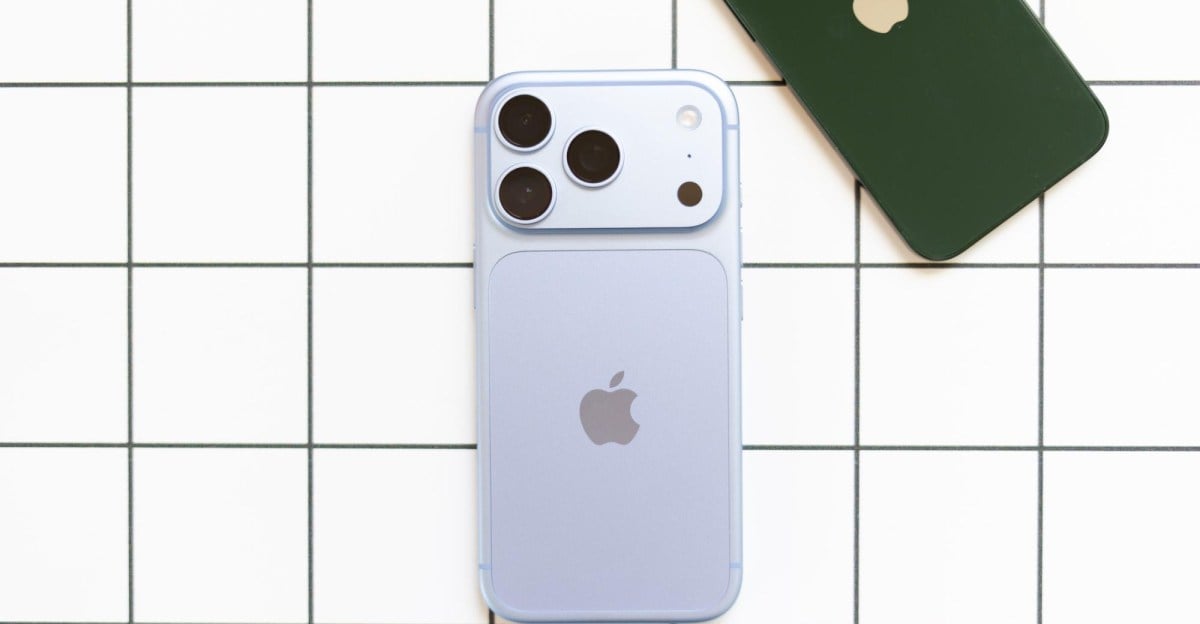
Verizon will charge $10 a month for iPhone Handoff, which lets one phone number move between two iPhones, the carrier confirmed on October 16, 2026. That is twice T-Mobile’s $5, and Verizon has given no launch date, describing the service only as “coming soon.”
The price came in Verizon’s iPhone Duo announcement, MacRumors reported. Verizon named the iPhone Duo and the iPhone 18 Pro as compatible models running iOS 27. Apple earlier said Verizon would adopt the feature before the end of the year, but Verizon hasn’t tied itself to that.
What the $10 Buys: An eSIM Switch Run by the Carrier
An eSIM is a SIM built into the phone, so a carrier can assign a number to it without a physical card. iPhone Handoff uses that to keep one number on two iPhones, with a main phone and a secondary one. Only one is active at a time, and unlocking the other moves the number over, TechRepublic reported. Verizon says the active phone keeps full access to its 5G network.
Verizon Will Charge $10 a Month for iPhone Handoff https://t.co/MhpITloXpn pic.twitter.com/O1V81zvSBx
Calls, voicemail, iMessage, RCS, SMS, MMS and Find My location follow the active phone. That is why there’s a fee at all: CNET reported, per JournalArta, that carriers must configure each phone’s eSIM and coordinate the switch on their networks. It isn’t just a setting on the phone.
The requirements, per TechRepublic: both iPhones on iOS 27 or later, the same Apple Account, Messages in iCloud, FaceTime and iMessage signed in, and an eSIM from a participating carrier. Turning the feature off also requires the carrier.
Verizon just confirmed it will charge $10 a month for iPhone Handoff. Here's what you need to know.iPhone Handoff is a feature Apple added in iOS 27. It lets you use the same phone number on two compatible iPhones and switch between them at any time. It runs on eSIM.Verizon… https://t.co/SiqpRAEaY7 pic.twitter.com/mWEaS1Z2Cm
PCMag said the software runs on the iPhone 11 or later, or the iPhone SE (2nd Gen) or later, and that some pairings, such as an Apple Watch, stay tied to one device. Tech Insider noted that Verizon names only the Duo and iPhone 18 Pro, so wider eligibility on Verizon is unconfirmed.
BigGo Finance reported that Verizon hasn’t said whether the second iPhone needs anything beyond the $10, or whether the feature is limited to certain plans.
Verizon will charge $10 a month for iPhone Handoff, the iOS 27 feature that shares one phone number across two iPhones.It works with the iPhone Duo and iPhone 18 Pro, with only one iPhone active at a time. pic.twitter.com/JhhcZpwFmG
Verizon’s $10 Compares With T-Mobile, EE and Deutsche Telekom
| Carrier | Monthly price | Status |
|---|---|---|
| Verizon | $10 | “Coming soon,” no date |
| T-Mobile | $5 | Already supported |
| EE (UK) | £5 on a rolling contract; free with Full Works Plus | “Coming soon” |
| Deutsche Telekom | €6.95 via MultiSIM; free in MagentaMobil L and XL | Supported |
| AT&T | None announced | No imminent plans |
MacRumors said AT&T recently suggested it has no imminent plans. Suaragarut reported a separate September comment to CNET: an AT&T spokesperson saw potential in the feature but said the company was focused on existing eSIM activation and transfer options.
EE’s pricing was detailed by 9to5Mac. Neither EE nor Deutsche Telekom nor T-Mobile is a like-for-like match for Verizon, since Verizon has so far announced no free tier.

Handoff Has No Date, but the iPhone Duo Ships October 23
Apple announced the feature at its September Surprise and Shine
event, naming T-Mobile and Deutsche Telekom as first supporters, with Verizon and EE to follow, per BigGo Finance. Duo preorders opened October 16, and retail availability is October 23 alongside the iPhone 18 Pro and 18 Pro Max, Tech Insider reported. Handoff has no matching date, so buyers could take a Duo home before the feature works on Verizon.
Who Needs Two iPhones on One Number?
The Verge’s writer concluded that, realistically, very few people will want or need Handoff. The likeliest users in that account are people pairing a Duo with a regular iPhone, or holding a small phone for lighter days.
Verizon will charge $10/month for iPhone Handoff. pic.twitter.com/lISpHwTuTS
A work phone is a weaker fit: T-Mobile specifies that the secondary iPhone should not have any other service attached to it,
and it can’t be used with a T-Mobile business account at launch. That is T-Mobile’s rule; Verizon hasn’t published its own.
Two Handoffs Share a Name, and the Fee Outlives the eSIM
Apple’s older Handoff, which continues activities across devices, is free and built into modern iPhones. The new one is a carrier service, Tech Insider noted, which may confuse support requests.
Verizon confirms $10 monthly fee for new iPhone Handoff feature https://t.co/7397jxQEXB
Still open: when Verizon will switch the service on, and whether plan limits or extra charges apply. And Jang reported that deleting an eSIM doesn’t cancel the monthly charge; customers must cancel with the carrier.