Following its August 30, 2026 launch aboard a SpaceX Falcon Heavy, NASA’s Nancy Grace Roman Space Telescope has crossed critical commissioning milestones by successfully testing its fine-guidance system and capturing its first coronagraph observations from space as it travels toward the Sun-Earth Lagrange point L2.
Engineers and mission planners evaluating the observatory’s early flight performance found themselves with an unexpected operational windfall. Barely two weeks after its August 30 launch, the team confirmed that efficient trajectory management and a lighter-than-expected spacecraft build have left the observatory with enough propellant for at least 22 years of science operations.
That figure more than doubles the mission’s original 10-year fuel budget. The savings did not stem from a single patch or hardware fix. Instead, three distinct factors contributed roughly four years of extra margin each, beginning with the spacecraft’s physical weight.
Propellant Budgets and Mass Margins on the Falcon Heavy Launch
Because a lighter vehicle burns proportionally less fuel on every correction burn, station-keeping maneuver, and orbit insertion, the mass reduction created immediate cascading savings.
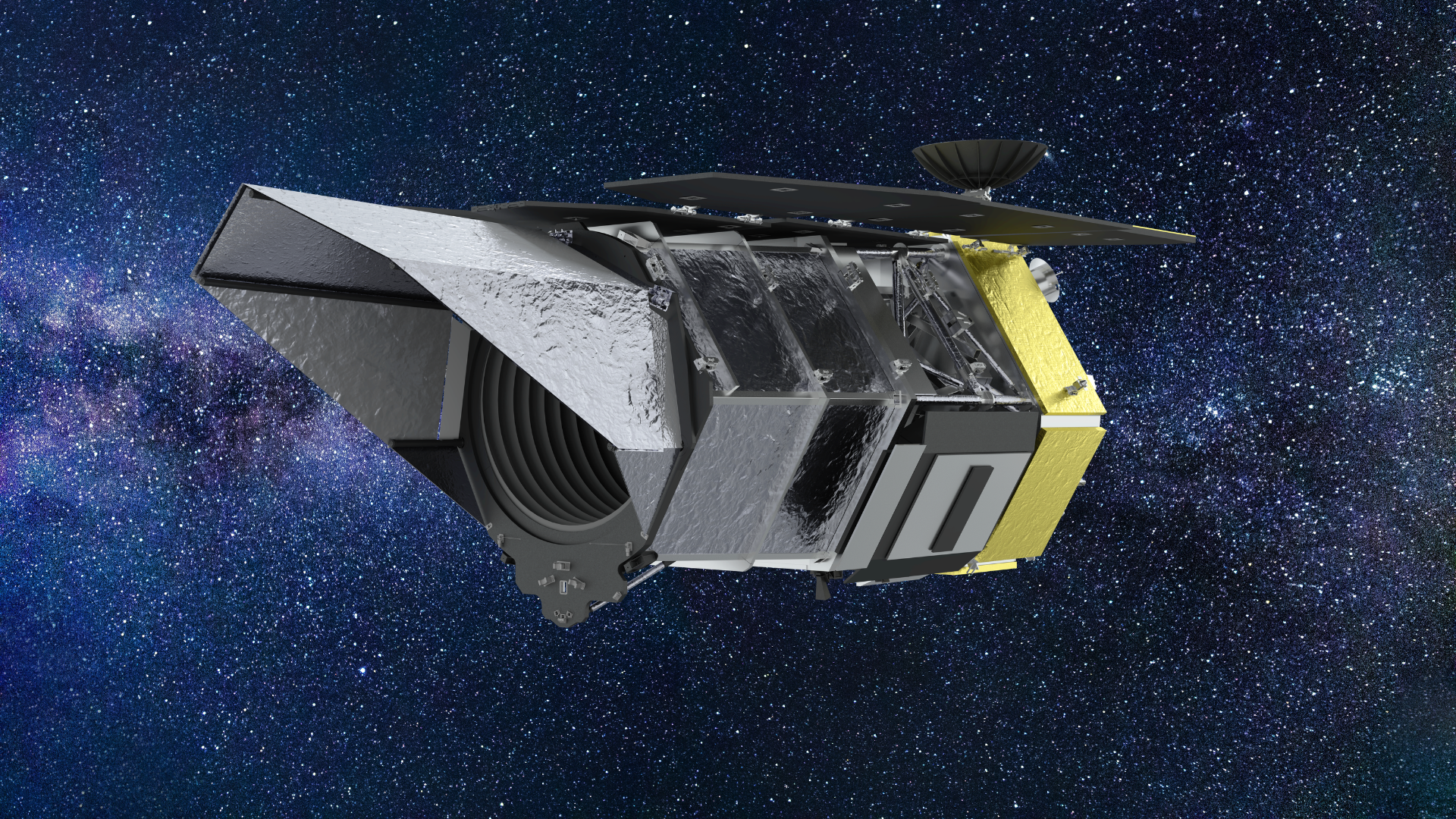
The launch itself added to the surplus. Leaving Earth aboard a SpaceX Falcon Heavy, the observatory required far less velocity correction than anticipated.
The fuel budget is based on a maximum mass so we won’t come up short.
Alison Rao, Roman propulsion lead via Hackaday
Fine-Guidance System Checks and First Coronagraph Light
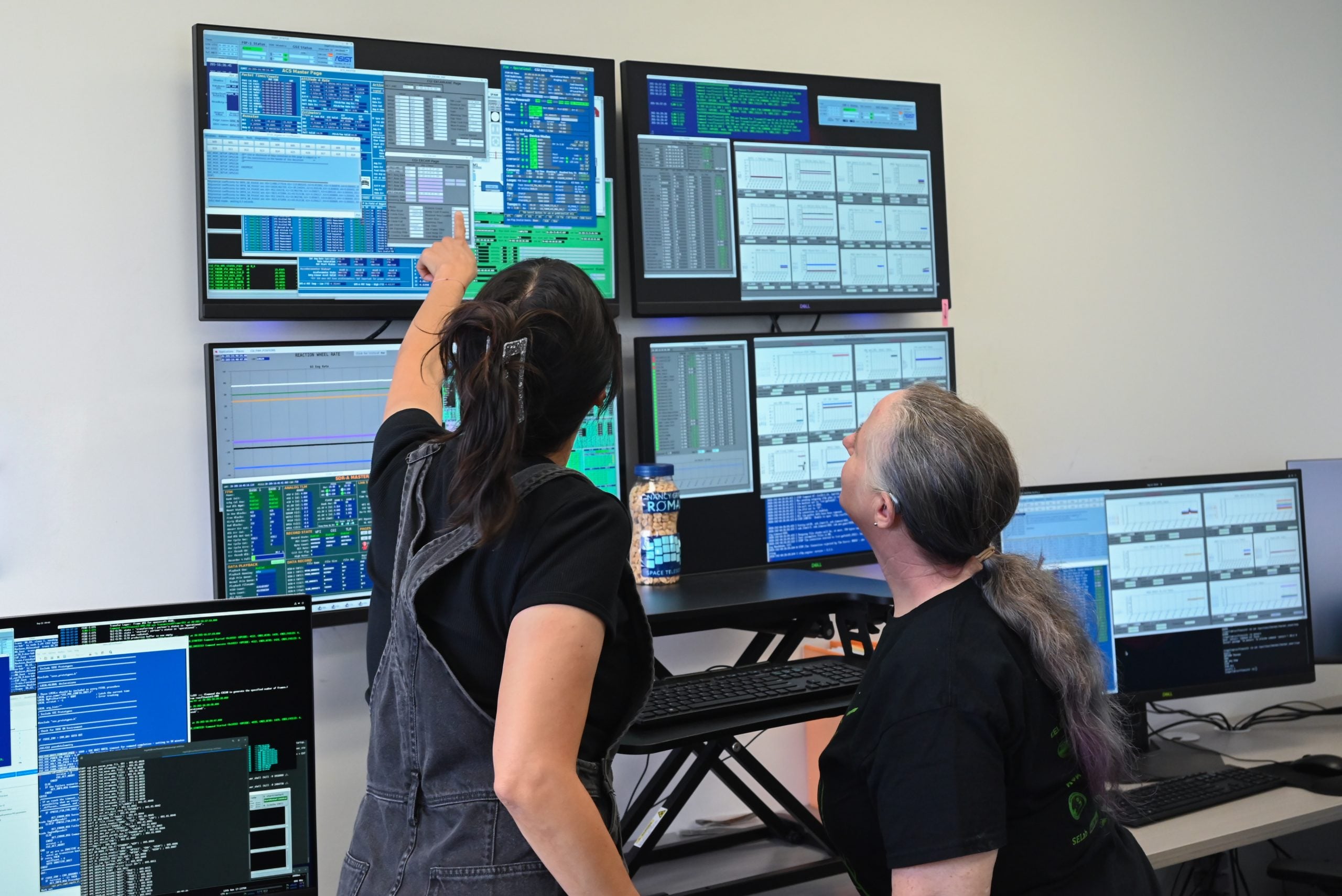
While cruising toward its operating station, the spacecraft executed a series of hardware validations. Between September 15 and 21, Roman’s fine-guidance system passed a rigorous series of evaluations. The mechanism assigns a small section of each of the 18 detectors in the primary Wide Field Instrument to rapidly track reference stars.
Information feeds from these guide stars are delivered to the attitude control system roughly four times per second, allowing microscopic adjustments to counteract drift. Tests confirmed that the setup maintains stability better than 1/100,000 of a degree for half an hour during Wide Field Instrument observations, and up to eight hours at a time for longer coronagraph integrations.
Every Roman observation relies on its ability to stay precisely pointed at the correct region of space long enough to collect an image, which can take from minutes to hours for a deep exposure.
Begoña Vila, Roman’s guiding instrument systems lead at NASA’s Goddard Space Flight Center
Following those guidance checks, the mission’s Coronagraph Instrument opened its optics to space on September 22.
Decade-Long Industrial Contributions to Instrument Alignment
Behind the hardware now operating in space lies more than a decade of ground development and testing supported by specialized industrial partners. Global nanopositioning supplier PI contributed cryogenic positioning stages, six-axis hexapods, and precision gantry systems used during the alignment and integration phases.
During assembly of the Wide Field Instrument, PI hexapods assisted with the precision alignment and bonding of prism and grism optics designated for slitless spectroscopy. These procedures are documented in the SPIE Journal of Astronomical Telescopes, Instruments, and Systems.
For the Coronagraph Instrument, PI fast steering mirror technology supported ground development, while piezoelectric actuators drive the fast steering mirror in the fine-pointing system.
Public Interest and Science Objectives Ahead
As the observatory continues its transit toward Lagrange point L2, public interest in its upcoming mission data remains high. Following the release of early test images showing star clusters captured as blurry green rings before full calibration of its 300-megapixel camera, an online reader survey revealed strong enthusiasm for the observatory’s exoplanet and dark energy goals.
Among respondents, 57% pointed to the search for habitable exoplanets as their primary area of interest, while 27% highlighted investigations into the potential sources of dark energy. Once commissioning concludes, the telescope will begin wide-field surveys intended to cover an area 100 times larger per snap than Hubble images.
Keep reading