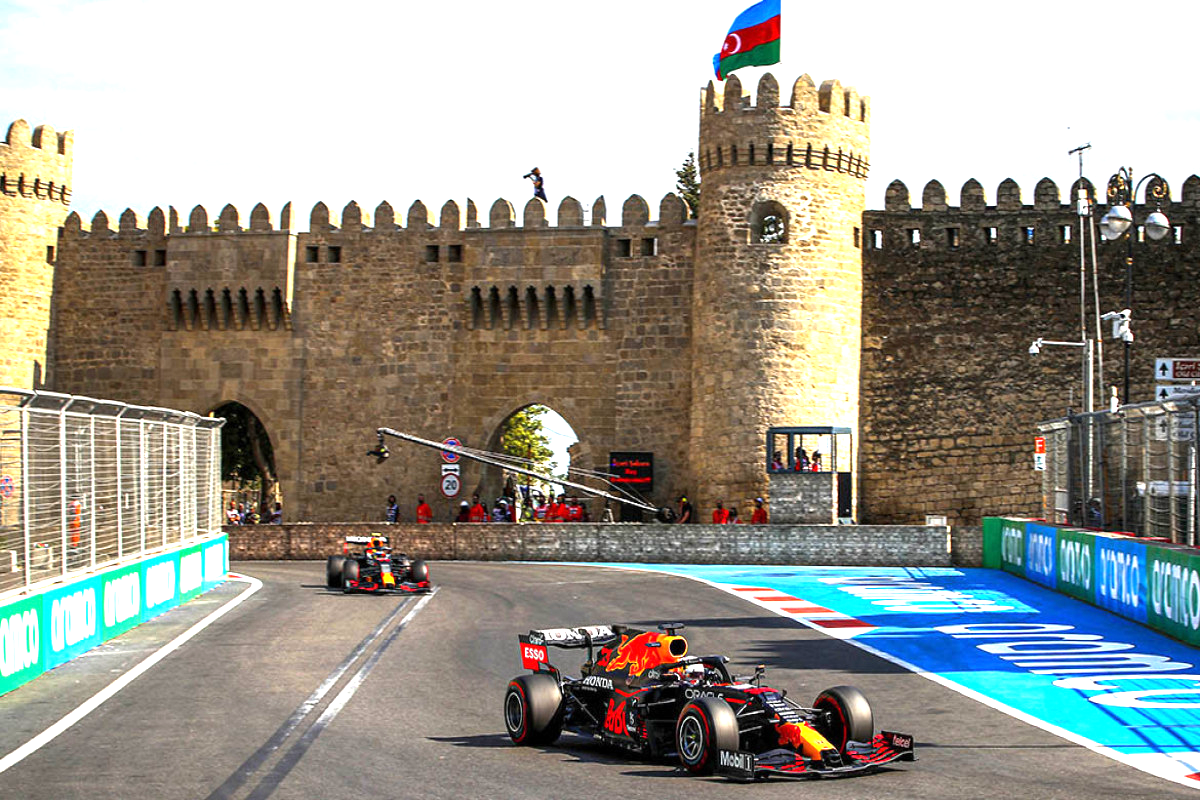
The 2026 Azerbaijan Grand Prix runs on Saturday, September 26, not Sunday, with the whole Baku City Circuit weekend shifted forward a day, ESPN reported. The move lands during an extended international break that has emptied Europe’s usual club football calendar.
Formula 1’s paddock lands in Baku this week for a race weekend that looks slightly out of step with the calendar readers are used to. According to ESPN’s report published September 24, 2026, the Qatar Airways Azerbaijan Grand Prix has been pulled forward by a full day, meaning the race itself runs Saturday instead of the sport’s usual Sunday slot. The outlet ties the switch to a broader gap in the sporting schedule: an elongated international break that has cleared Europe’s top football leagues off the weekend, leaving room for F1 to move.
Practice 1 was already underway when ESPN’s live timing feed captured the field, with Max Verstappen fastest for Red Bull after 12 laps, ahead of Mercedes’ George Russell and Kimi Antonelli. Lewis Hamilton ran fourth for Ferrari, with Charles Leclerc fifth and Nico Hülkenberg sixth for Audi. Oscar Piastri was seventh for McLaren, with Liam Lawson eighth for Racing Bulls and Pierre Gasly ninth for Alpine. Franco Colapinto sat 10th for Alpine. Lando Norris, by contrast, sat 11th in that session, more than two seconds off the pace, with Arvid Lindblad 12th for Racing Bulls, Oliver Bearman 14th for Haas, Fernando Alonso 15th for Aston Martin, Sergio Pérez 16th for Cadillac, Lance Stroll 17th for Aston Martin, Carlos Sainz 18th for Williams, Esteban Ocon 19th for Haas, Alex Albon 20th for Williams, Valtteri Bottas 21st for Cadillac and Gabriel Bortoleto 22nd for Audi.
Hadjar’s Return From a Wrist Injury
How F1 drivers, engineers and strategists tackle the Baku
The rescheduled weekend also marks Isack Hadjar’s comeback from injury. ESPN’s coverage flags Hadjar’s wrist injury as still likely to cause him pain on his Baku return, a detail that matters given how physically demanding this circuit is on drivers. Baku’s Turn 8 narrows and its long, bumpy main straight put sustained load through the wrists and forearms, making any lingering injury harder to manage than at a smoother-flowing track.
Hadjar drove for Red Bull in that opening practice session, according to ESPN’s live timing, finishing 13th with a gap of 2.486 seconds to Verstappen over eight laps. Whether the wrist affects his race-day pace remains an open question the timing sheets alone can’t answer. Separately, ESPN’s paddock coverage this week also notes that Hadjar has signed a contract extension with Red Bull, a development reported alongside his return from injury.
Elsewhere in the paddock, ESPN’s rolling coverage includes Esteban Ocon hinting at a possible departure from Haas, describing himself as a “free agentfor 2027, while Pierre Gasly has criticized online trolls over what he called
disturbingthreats. Fernando Alonso has also been critical of new rules, saying
circuits were killed,” part of wider driver pushback that ESPN’s coverage links to changes affecting the sport this season, including races running roughly 15km shorter, or about two to three laps fewer, from 2027 onward. Lewis Hamilton, for his part, said shorter F1 races “makes no senseand separately said he
hopes” F1 can race in the Middle East.
Why Baku Still Rewards Qualifying Over Overtaking
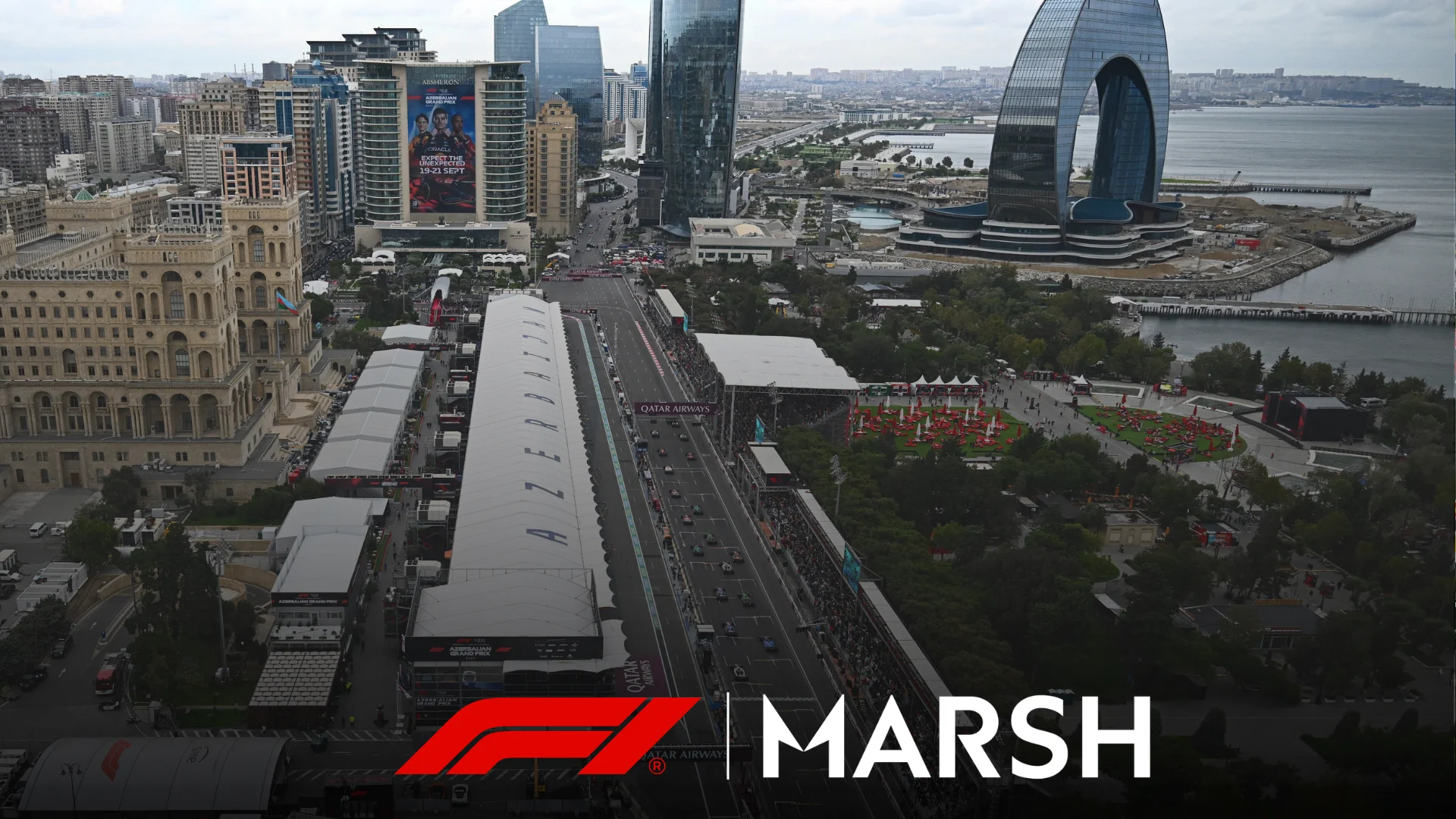
Formula 1’s own preview, published September 23, 2026, digs into why the Baku City Circuit has become less about the novelty of its below-sea-level street layout and more about the chaos of Qualifying, Safety Car timing and braking bravery into Turn 1. The piece notes the track set a template — mixing a traditional street circuit with Monza-style low-downforce speed — that Miami and Las Vegas later copied, though Baku got there first. The preview frames this as a shift in what fans and teams look for at Baku a decade after F1 first arrived there, moving away from fascination with the mammoth main straight, the narrows of Turn 8, and the novelty of racing below sea level.
Explained 2026 Azerbaijan Grand Prix Saturday Sunday Schedule Baku
Setup choices at Baku cut both ways. Brakes arrive cold at the Turn 1 hairpin after the long main straight, then face repeated, rapid-fire braking zones through the twisting sector two around the Citadel that demand heavy cooling, especially if a car is stuck in traffic. Formula 1’s preview describes this as a compromise race engineers simply have to accept rather than solve, since there isn’t really a solution to either issue. The same tension applies to downforce: more of it wins time through the Citadel’s tighter corners in Qualifying, but it costs speed down the straights come race day, particularly for any car trying to save Boost out of the final corner to defend the run to Turn 1. Active aero softens that trade-off in 2026 but doesn’t erase it, the preview notes, since teams still face a genuine choice rather than a binary one.
McLaren’s Randy Singh on Overtaking Trends and Flags
McLaren Racing Director Randy Singh, quoted in Formula 1’s preview, points to Oscar Piastri’s pass for the team’s first win at the 2024 Azerbaijan Grand Prix as proof that overtaking at Baku is possible despite the circuit’s reputation. He also flags a wrinkle for 2026: new power units and their deployment characteristics could make passing harder even as raw overtaking numbers rise across the season compared with 2025.
Historically, Baku has been a strongly Qualifying-biased circuit as overtaking has tended to be challenging here, however, Oscar's overtake for our first win in the 2024 Azerbaijan Grand Prix proved that it can be done.
— Randy Singh, Racing Director, McLaren
Isack Hadjar Expects Wrist Injury Painful Azerbaijan Grand Prix
Singh also addresses the strategic knock-on effect of Baku’s frequent red and yellow flags. He explains that the increased flag frequency raises the value of setting a lap time early in Qualifying, tempting teams to leave the garage sooner even at the cost of track evolution. In the race, he says, those same flags push drivers toward extending long first stints, hoping to catch a Safety Car window that resets the field.
While one-stop races can sound simpler to execute, they can often increase pressure in the lead-up to the first pit stop. With a wide stop window, there can be several opportunities to pit, sometimes making the decision more complex.
— Randy Singh, Racing Director, McLaren
Norris’ 2024 Reverse Strategy From 16th on the Grid
Formula 1’s preview points to Lando Norris’ run at the 2024 Azerbaijan Grand Prix as the clearest evidence that a one-stop Baku race doesn’t have to be predictable. Norris qualified 16th after a mix of bad luck with flags and a tyre gamble that backfired in Q1, then started the race 15th. The preview credits the pace of his McLaren, combined with a reversed strategic approach, for turning that grid slot into a race worth watching — though it stops short of detailing his final finishing position.
None of the three sources spell out exactly why organizers chose Saturday for the 2026 race beyond the football-calendar gap ESPN cites, leaving the precise scheduling rationale — whether broadcast demands, travel logistics, or another factor drove the call — unaddressed in the reporting so far.